GAK150 is a niche Kontakt instrument worth buying if you specifically want aggressive, unstable analog timbres at a budget price. If you want flexibility, look elsewhere.
GAK150 is AudioThing's sample instrument built from recording a Gakken SX-150 analog synthesizer kit through a Metasonix R-54 Tube VCO/VCF. The result is 40 Kontakt instruments, 56 samples, and a sound that sits somewhere between a broken Soviet oscillator and a fuzzed-out signal chain. We tested it across drone production, industrial textures, and lo-fi beat work. It earns its price. It does not earn much more than that.
The launch price was an intro rate, settling at a regular price of $12. At that number, the bar for "worth it" is low. We'd still rather you know exactly what you're walking into before you click buy.
What You're Actually Getting
The Gakken SX-150 is a toy synthesizer kit sold as an educational product in Japan. It's a single oscillator with a ribbon controller and no patch memory. AudioThing ran it through the Metasonix R-54, a tube-based VCO/VCF module known for adding harmonic distortion that ranges from subtle warming to full signal destruction.
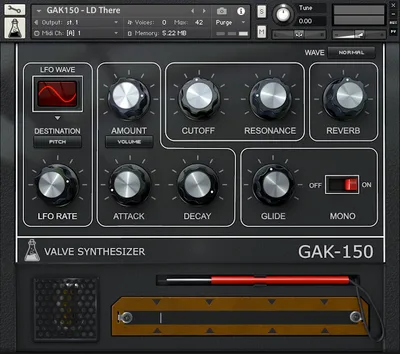
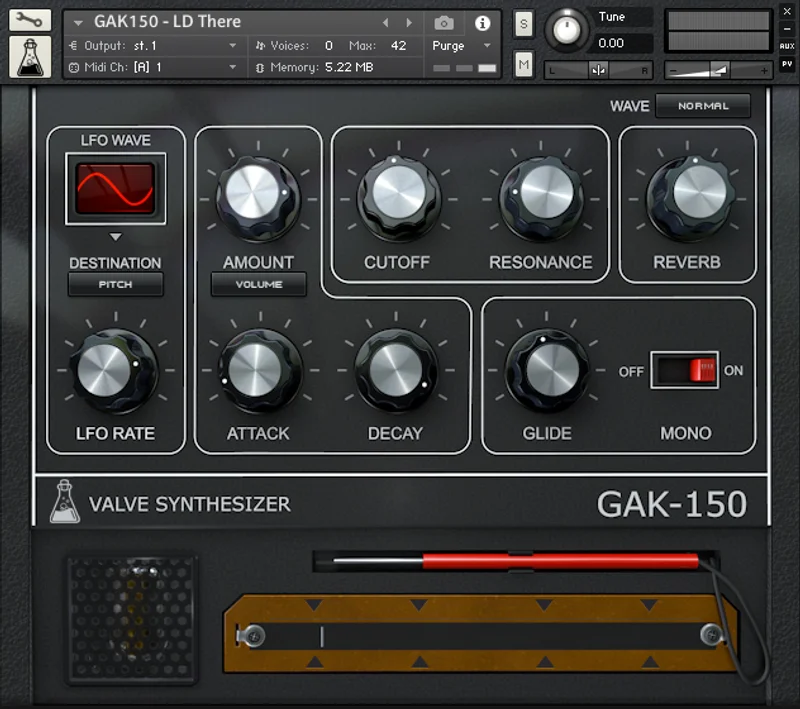
Those recorded samples were packaged into Kontakt at 44.1kHz and 24-bit resolution. The library weighs 137 MB. You get three waveform sets: normal, fatter (more detuning applied), and slowed. Each set gives you a different tonal starting point. Inside Kontakt, there's LFO and envelope modulation, a 12dB per octave low-pass filter, and a reverb send. That's the full feature set. Nothing hidden, nothing extra.
Full Kontakt 5.1 or higher is required. Kontakt Player will not load this.
The Good
The tube chain does something that most software synths genuinely struggle to fake. We loaded the "fatter" waveform set and played a sustained pad in the mid-range. The harmonic content above 3kHz had a brittle, fizzing quality that sat in a mix without needing additional saturation. It already had character baked in.
We then ran the same patch into a send bus with 25ms of pre-delay and a 2.4-second reverb tail. The instability of the source material meant the reverb didn't smear into a clean blob. It stayed dirty. That's satisfying in a way that clean oscillators can't replicate with post-processing alone.
The three waveform sets are a clever design choice for such a small library. "Normal" is aggressive but usable as a lead texture. "Fatter" adds enough detuning to push into drone territory. "Slowed" drops the pitch and opens the texture up, which works brilliantly for low-end texture layers under a kick. Three distinct characters from one recording session is smart work.
The 12dB/octave filter inside the Kontakt instrument is functional and direct. It cuts mud without killing the tube character above the cutoff. At $12, we have paid more for single-use samples that delivered less personality.
The Not-So-Good
56 samples across 40 instruments is a thin number. That averages out to 1.4 samples per instrument. Kontakt can stretch and map samples across a keyboard range, but pitch-stretching a tube-saturated analog source produces artifacts that aren't always the good kind. Play the normal waveform above the fourth octave and you'll hear the stretching strain. It's annoying.
The Kontakt Player restriction is a real problem for newer producers. Full Kontakt costs money. If you're already in the ecosystem, this is a minor note. If you are not, the instrument just became much more expensive to access.
We also found zero update history on this library. It launched in 2015. AudioThing has released plenty of plugins since. GAK150 has not been updated, expanded, or documented with a changelog anywhere we could find. That's a frustrating signal for a product you're expected to trust in your signal chain for years. Buying into a library that's been standing still for a decade is a risk we want you to weigh honestly.
Compared to the Alternatives
For aggressive lo-fi analog textures, the most direct comparison is Klevgrand's Ting, which covers acoustic textures but shows the kind of boutique sampling approach AudioThing is going for. On the synthesis side, Arturia's Juno-106 V is cleaner and more flexible but costs significantly more and doesn't offer the same tube-circuit instability.
For Kontakt-based lo-fi instruments specifically, Spitfire Audio's LABS line offers free options with more samples per instrument and broader genre reach. LABS won't give you tube saturation. But it's free, and the sample depth is deeper.
If you want the aggressive tube character without a Kontakt dependency, Unfiltered Audio's Indent 2 does drive and harmonic distortion on any source in real time. It's not the same workflow, but it solves the same timbral problem with more control and no platform lock-in.
GAK150 wi ns only on the specificity of its source material. Nothing else is literally "toy synth through a Metasonix tube circuit." That niche has value, but it's a narrow window.
Who Should Buy This
- ✅ Buy if you work in industrial, experimental, or dark electronic music and need unstable oscillator textures that already have tube character baked in
- ✅ Buy if you own full Kontakt and are spending under a modest amount to fill a specific sonic gap in your library
- ✅ Buy if you want lo-fi analog sound without building a hardware chain yourself
- ❌ Skip if you only have Kontakt Player. It won't load.
- ❌ Skip if you need a versatile, multi-purpose synth library with broad keyboard coverage and deep sample mapping
- ❌ Skip if long-term developer support matters to your workflow. There's no track record here.
Score Breakdown
| Category | Score | Notes |
|---|---|---|
| Sound Quality | 3.5/5 | Tube character is real and distinctive; pitch stretching artifacts hurt the upper register |
| Value for Money | 4.0/5 | $12 for a specific, usable texture library is fair, but the full Kontakt licence cost complicates this for newcomers |
| Ease of Use | 3.5/5 | Kontakt's interface handles navigation; the library itself is direct and low-overhead |
| Features | 2.5/5 | LFO, envelope, filter, and reverb cover basics but nothing beyond; 56 samples is sparse |
| CPU Efficiency | 4.0/5 | 137 MB library loads fast; Kontakt itself is the heavier variable, not the samples |
| Overall | 3.6/5 | Niche tool that delivers on its narrow promise; wrong choice for general-purpose sound design |
Alternatives to Consider
Spitfire Audio LABS review, Free, broader sample depth, no Kontakt dependency. Less character, more versatility. Our first recommendation for producers who don't already own a full Kontakt licence.
Best lo-fi Kontakt instruments, If GAK150's texture is the right direction but the sample count feels too thin, this roundup covers libraries with similar aesthetic goals and more content per dollar.
AudioThing Things Texture review, AudioThing's own texture-focused instrument covers more timbral ground with a different workflow. Worth comparing before you commit to the GAK150 specifically.
Our Verdict
GAK150 is one of those plugins we'd describe as ugly in the best way. The Gakken SX-150 was never meant to be a studio instrument. The Metasonix R-54 is a tube circuit with a reputation for doing strange things to signals. Recording the two together and selling the result at $12 is either a great idea or a very specific joke. Turns out it's mostly a great idea.
But 56 samples is a hard number to defend in 2026. Kontakt instrument libraries at this price have since grown in scope. GAK150 has not grown at all. The sound holds up. The library depth doesn't.
Buy it at $12 if you own full Kontakt and you need one aggressive, tube-burned oscillator texture in your library. It'll find a home in three or four tracks a year and you'll be satisfied it's there. Skip it if you want a workhorse synth instrument that earns its folder space every session. That's not what this is, and no amount of tube saturation changes it.
Frequently Asked Questions
Does GAK150 work with Kontakt Player?
No. GAK150 requires a full Kontakt licence at version 5.1 or higher. It will not load in the free Kontakt Player. If you only have Kontakt Player, this library is inaccessible to you without upgrading your Kontakt licence first.
What hardware was sampled to make GAK150?
AudioThing recorded a Gakken SX-150 Analog Synthesizer Kit, a Japanese educational toy synthesizer, through a Metasonix R-54 Tube VCO/VCF module. The Metasonix unit adds harmonic distortion and tube saturation to the already unstable oscillator signal. That hardware chain is the entire source of GAK150's character.
How many sounds does GAK150 actually include?
The library contains 40 Kontakt instrument patches built from 56 samples recorded at 44.1kHz and 24-bit resolution. The total download size is 137 MB. Three waveform sets (normal, fatter, and slowed) account for the tonal variation across those 40 instruments.
Is GAK150 good for genres other than electronic music?
The tube-saturated, unstable oscillator textures are a poor fit for genres that need clean, natural synthesis. It works for industrial, dark electronic, experimental, and lo-fi hip-hop production. For anything requiring traditional tonal clarity, like pop, orchestral, or jazz, the character of this library will fight your mix rather than sit in it.