
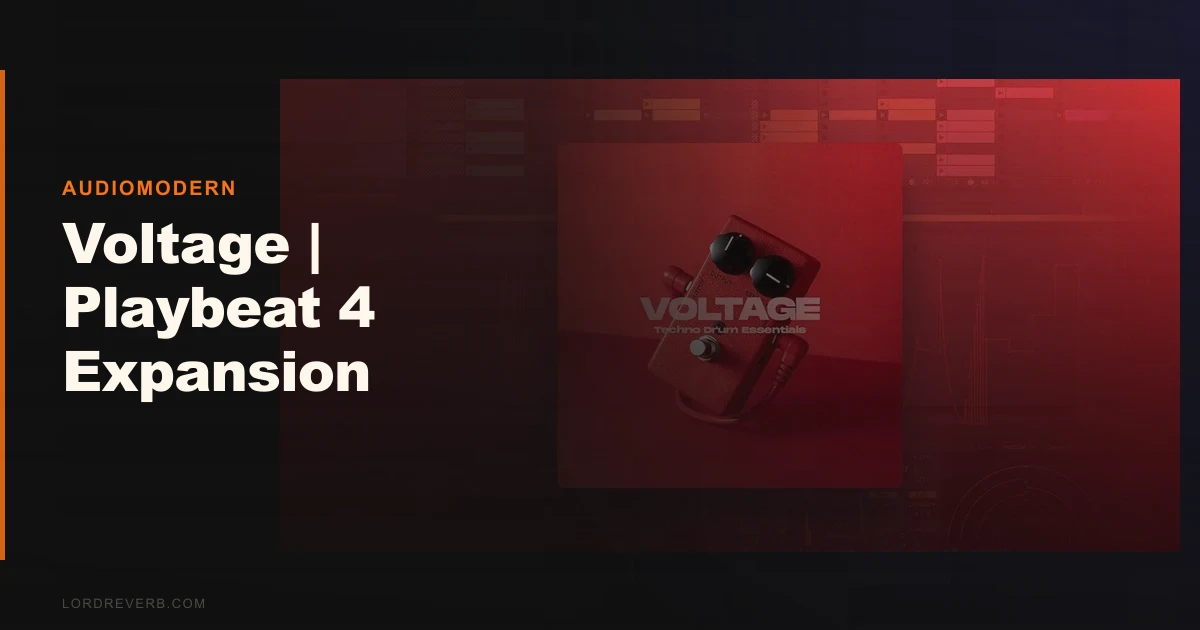
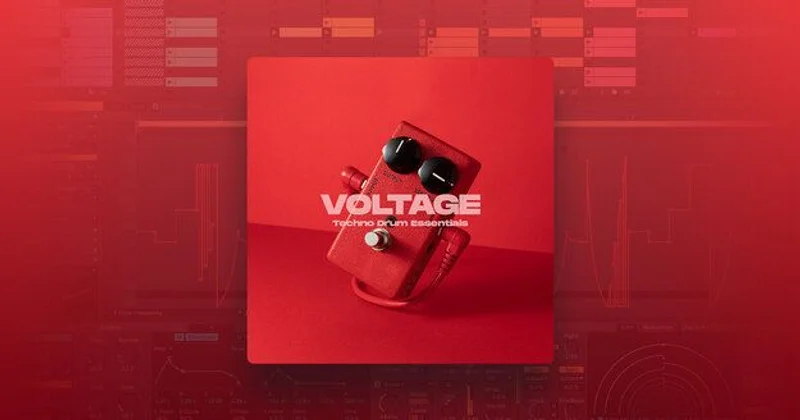
The Voltage expansion for Playbeat 4 delivers exactly what underground electronic producers need: 40 dark, industrial-leaning presets and 250+ premium samples built specifically for techno, minimal, and IDM production, all for $10.
We loaded Voltage on a Tuesday afternoon with a half-built techno track sitting open in Ableton. The kick in our project was fine. Serviceable. The kind of kick that doesn't embarrass you but doesn't rattle anyone's chest either.
We dropped Preset 07 from Voltage into Playbeat 4 and hit play. The kick came back with weight behind it. Not a bedroom kick. Something that sounded like it belonged in a 3am peak-time set, low-end sitting around 60Hz with a transient that punched through the mix without needing a compressor to tighten it.
That moment told us most of what we needed to know about Voltage. It's not a revolutionary pack. It's a very focused one. And for $10, that focus is worth your attention if you produce in the dark electronic space.
What Voltage Is (And What It Definitely Isn't)
Voltage is a content expansion for Audiomodern's Playbeat 4 generative beat sequencer. It adds 40 presets and 250+ samples built around techno, minimal, industrial, and IDM rhythms.
It is not a standalone plugin. Not a sample library you can drag into your DAW browser. Not a toolkit for hip-hop, house, or anything with warmth in it.
If you don't own Playbeat 4.0.0 or higher, this pack does nothing. Full stop. You'd be buying a key without the lock.
What it is good for: feeding Playbeat 4's Smart Engine with source material that actually fits the genre you're working in. The base Playbeat library is broad and useful, but Voltage cuts straight to one dark, mechanical corner of electronic music and goes deep there. That specificity is the whole value proposition.
Living With Voltage Over Several Sessions
Setup took about 30 seconds. Download the pack, point Playbeat 4 at the folder, done. No account activation. No iLok. No annoying serial number drama.
The first session we spent just cycling through all 40 presets to map the terrain. About 28 of them sat in proper techno territory: distorted hats, sub-heavy kicks, stuttering percussion with industrial decay. Around 8 felt closer to IDM, with more rhythmic complexity and off-grid timing baked in. The remaining 4 landed in ambient-industrial space, more texture than groove.
The Smart Engine is where Voltage earns its keep over multiple sessions. We took Preset 12, a driving minimal pattern with a snare that sat back in the mix at around -18dBFS, and used the AI variation function to generate 30 different rhythmic interpretations. About 11 of those were genuinely usable without further editing. That's a satisfying hit rate for a generative tool.
We did find one frustrating quirk. The sample naming convention inside Voltage is cryptic. Files labeled things like "VLT_KCK_03" give you no tonal information. You're auditioning blind. It's annoying when you're looking for a specific low-end character and have to scroll through 20 kick variants to find it.
Over a week of use, Voltage became a starting-point tool, not a finishing one. We'd load a preset, let the Smart Engine mutate it twice, then pull the result into Ableton's arrangement for further processing. That workflow held up well.
The Real Trade-Offs With Voltage
The price is the strongest argument in this pack's favour. At $10 full price, the barrier to entry is low enough that the trade-offs feel manageable rather than dealbreaking.
The trade-off we kept returning to is depth versus breadth. Voltage goes narrow and hard into one genre cluster. That's brilliant if techno is your world. It's a waste of money if you split your time between darker and lighter genres. The samples don't flex. They sound like what they are: designed for dim rooms and loud systems.
The other trade-off is the dependency on Playbeat 4 itself. The pack makes Playbeat 4's Smart Engine genuinely more useful for dark electronic work. But if you're not already deep into Playbeat 4's workflow, you won't get the most from what Voltage offers. The generative AI functionality is where these presets shine, and that lives inside the host plugin, not inside the pack itself.
We also wish the sample count was slightly more transparent. Some listings say 200+, others say 250+. We counted closer to 260 during our session, which is a minor thing but suggests Audiomodern could tighten up how they communicate pack contents.
Against the Field: How Voltage Compares
Two other Playbeat 4 expansions sit in the same ecosystem. Orion and Kn ock are the main competitors inside the Audiomodern catalogue.
Playbeat 4 expansion packs compared
Knock is built for hip-hop and trap. If your kick needs to knock rather than grind, that's the pack to pull. Voltage wins on darkness and mechanical texture. Knock wins on impact and groove feel.
Orion sits in more cinematic and atmospheric territory. Voltage is more rhythmically aggressive. For peak-time techno, Voltage is the clearer choice between the two.
Outside the Audiomodern ecosystem, you're looking at sample packs from labels like Loopmasters or Native Instruments' expansions for Maschine and Battery. Those cost significantly more and require no specific plugin host. If you're not already on Playbeat 4, that matters. If you are, Voltage is cheaper and integrates better.
Best drum sample packs for techno production
The Real Verdict
Buy Voltage if you own Playbeat 4 and produce techno, industrial, or IDM. At a discount, there is no credible argument against trying it. The presets are well-constructed, the samples hit the right frequency zones, and the Smart Engine integration makes it genuinely useful rather than just decorative.
Skip it if you don't own Playbeat 4. Skip it if your productions live outside dark electronic territory. And skip it if you're hoping for melodic content or anything with tonal range. Voltage is a percussive, rhythmic tool. That's its only job. It does that job well.
Score Breakdown
| Category | Score | Notes |
|---|---|---|
| Sound Quality | 4.0/5 | Kicks and percussion sit well in dark electronic mixes without heavy post-processing |
| Value for Money | 4.5/5 | $10 full price, lower on discount, hard to argue against for Playbeat 4 users |
| Ease of Use | 3.5/5 | Loads instantly, but cryptic file naming slows auditioning |
| Features | 3.5/5 | 40 presets and Smart Engine integration work well; no melodic or tonal content at all |
| CPU Efficiency | 4.5/5 | Pack itself adds no CPU load beyond what Playbeat 4 already costs |
| Overall | 3.9/5 | Tight, genre-specific, and underrated at this price for the right producer |
Alternatives to Consider
If you want more rhythmic variety within the Audiomodern ecosystem, look at Playbeat 4 Knock expansion review. It's built for hip-hop and trap, with more swing and impact in the low end. A different tool entirely.
For producers who want genre-versatile drum content and aren't locked into Playbeat 4, best drum machine plugins for electronic music gives you a broader view of what's available at various price points.
If the generative side of Playbeat 4 is what draws you and you want to go deeper on that before buying expansions, read Audiomodern Playbeat 4 review first. Voltage makes more sense once you understand what the host can do.
Voltage is a pack that rewards committed Playbeat 4 users working in dark electronic music. Six dollars for 250+ samples that actually sound like techno, not like someone's idea of techno. That's not a small thing.
Frequently Asked Questions
Do I need Playbeat 4 to use the Voltage expansion?
Yes. Voltage is not a standalone product. You need Playbeat 4 version 4.0.0 or higher installed and activated before Voltage does anything. If you're on an older version of Playbeat, update first. The expansion won't show up without the correct host version.
Is Voltage worth buying if I only occasionally produce techno?
Probably not. The samples are built for dark, mechanical electronic music. They don't flex into other genres convincingly. If techno and IDM are occasional rather than primary, the $10 could go further with a broader sample pack from a different source.
How does the AI Smart Engine work with the Voltage presets?
Playbeat 4's Smart Engine uses its built-in AI to generate rhythmic variations from any loaded preset. With Voltage loaded, you select a preset and trigger the variation engine, which produces new patterns using the same samples in different rhythmic configurations. It's fast and produces genuinely varied results. We found roughly 1 in 3 generated variations usable without editing.
What DAWs does Voltage work with?
Voltage works in any DAW that supports Playbeat 4. That covers Ableton Live, Logic Pro, FL Studio, Pro Tools, Cubase, Studio One, Bitwig, and Reaper on both Mac and Windows. The expansion itself is just content inside Playbeat 4, so DAW compatibility is entirely determined by the host plugin.