Affiliate disclosure: the "Get this deal" button is an affiliate link to the store. If you buy through it we earn a commission at no extra cost to you. Full policy

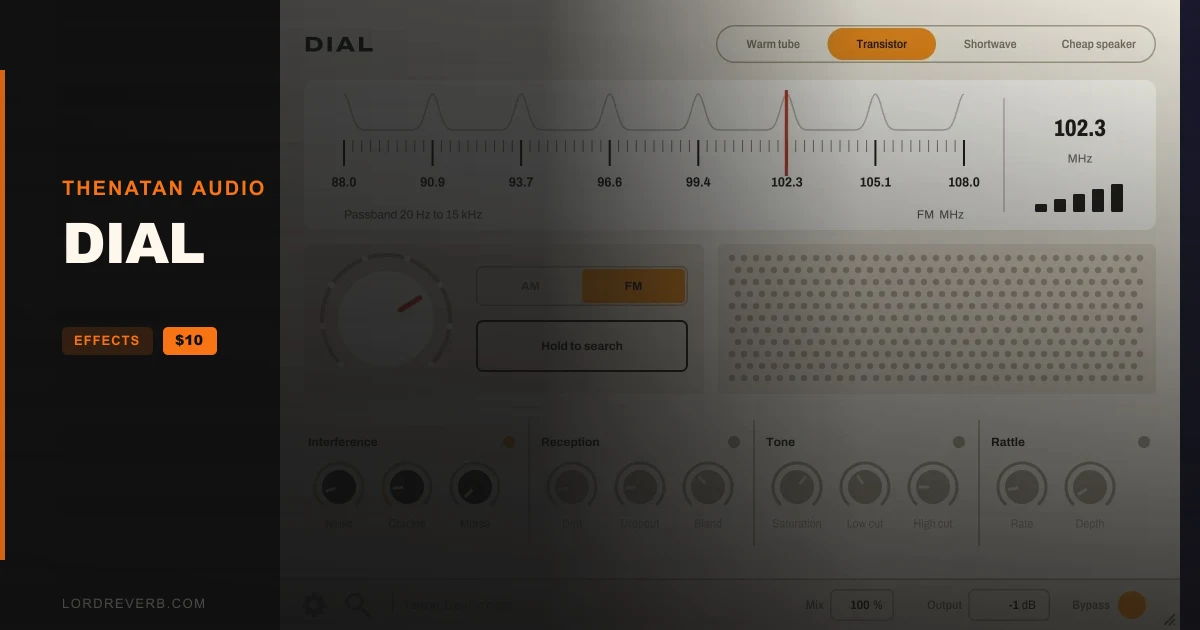
DIAL Black Friday pricing takes 80% off Thenatan Audio's multi-effect plugin, which lands at $10 until Nov 19, 2026.
DIAL is a radio, not a lofi filter. According to the maker, DIAL gives your sound the polish of a radio feed instead of wearing it down, and it is available for Mac and Windows.
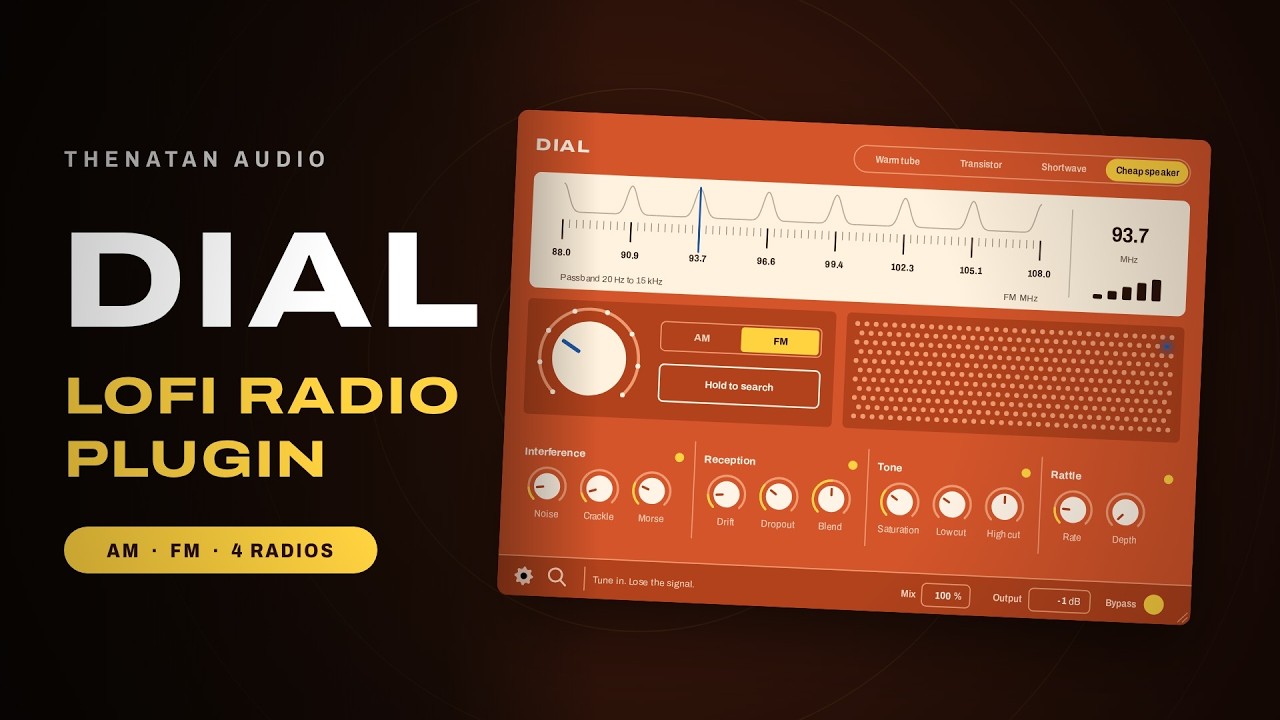
Six processors sit in one fixed chain, and each one models something that happens between a transmitter and a speaker.
The signal path is physically ordered. Noise enters before the band filter, the same way it does in a real receiver.
Every block has its own bypass that actually stops it processing. Master Mix and Output sit in the footer.
Tuner, Interference, Tone, Reception, Rattle and Output are the available controls. Noise grows louder as you detune away from a station, then quiets once you lock onto it, and the static has no steady rhythm to it.
The scale carries seven preset stops spread over the full range, each one flagged with a longer tick mark. Settle the pointer exactly on a station and the sound comes through cleanly. Leave it in the gaps and you get little more than a faint trace under the hiss.
Drag the needle in the dial window or spin the big Tune knob. The frequency readout, signal-strength bars and passband display all react as you tune, and the reception curve is drawn above the scale.
The SEARCH control only works while pressed down, so it never latches on. For as long as you keep your finger on it, the dial jumps to a new random spot six times every second. When you let go, the needle eases back to wherever Tune is set, taking about 50ms to get there. Drive the button with automation rather than the knob, and the movement sounds like an organic sweep instead of a stiff, mechanical ramp. The maker points to transitions, fills, intros and pre-drop moments.
AM and FM behave as two different radios:
Switching between bands is smoothed with a crossfade, which means automating the change during a passage stays free of pops. The AM band collapses the signal to mono and cuts the range down hard, a quick route to a phone or intercom sound.
The plugin also ships with four radios, each with its own sound and its own look. Pick a different one and the interface changes with it:
If you want one DIAL plugin that turns a loop into a finished broadcast in a single insert, that is the pitch.
Yes. The DIAL Black Friday deal takes 80% off Thenatan Audio's multi-effect plugin, bringing it to $10. The offer runs until Nov 19, 2026.
DIAL is a multi-effect plugin built as a radio rather than a lofi filter. Six processors run as one chain, each modelling something between a transmitter and a speaker, and it works on Mac and Windows.
DIAL has six processors in a fixed, physically ordered chain: Tuner, Interference, Tone, Reception, Rattle and Output. Each block has its own bypass that genuinely stops it processing, plus Master Mix and Output in the footer.
AM covers 300Hz to 3.4kHz with extra drive, folded to mono, for a narrow gritty broadcast. FM covers 60Hz to 15kHz, cleaner and fully stereo. The band switch crossfades, so automating it mid-phrase causes no click.
Prices and end dates are checked at publishing time and can change, so confirm them at the store before you buy.