
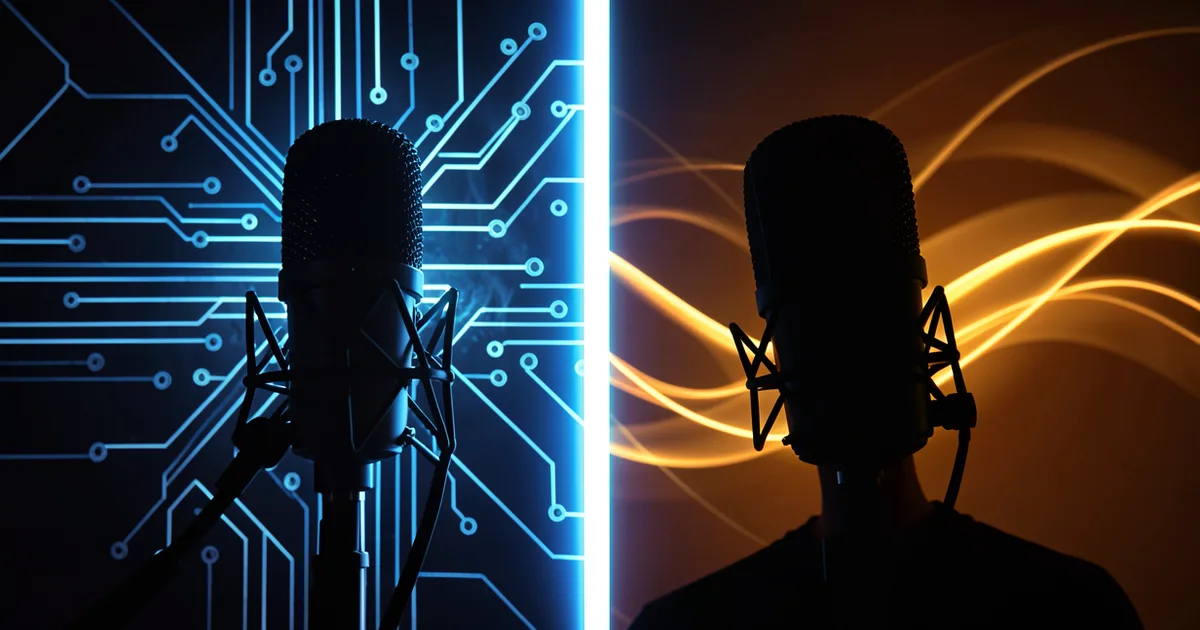
Condenser microphones pick up more detail and work best in treated rooms for vocals and acoustic instruments. Dynamic microphones handle loud sources and rough environments without needing phantom power or acoustic treatment.
Pick the wrong mic for your room and your recordings will fight you every session. Not because the microphone is bad. Because you chose the wrong tool for the space you're actually in.
We've tracked vocals through a Neumann TLM 103 in a bedroom with zero treatment. We've also tracked them through a Shure SM7B with a reflection filter and decent preamp. The SM7B session sounded better. The condenser captured everything, including the HVAC system, the neighbor's dog, and the box-shaped flutter echo bouncing off untreated walls.
That's the real lesson nobody puts in the headline. Condenser vs. dynamic isn't just a spec comparison. It's a room conversation.
Here's everything you need to know to make the right call.
How Do Condenser and Dynamic Mics Actually Work?
The technology inside the mic determines everything else: sensitivity, sound character, power requirements, and how the mic behaves when things go wrong.
Dynamic microphone transducers
A dynamic mic uses electromagnetic induction. Sound waves move a diaphragm attached to a coil of wire. That coil sits inside a magnetic field. Movement generates voltage. Simple, mechanical, durable.
The coil adds mass. More mass means slower transient response. That's not always bad. On a kick drum or guitar amp, that slight softening of attack actually works in your favour.
Dynamic mics don't need external power. Plug into any XLR input and go.
Condenser microphone transducers
A condenser mic uses variable capacitance. Two plates sit very close together. One moves with sound pressure. As the gap changes, so does the electrical charge. You need external power to maintain that charge: +48V phantom power from your interface or preamp.
Because there's no coil mass, condensers respond faster to transients. They pick up more high-frequency detail. Self-noise is lower. The Rode NT1 Signature sits at 4dBA self-noise. That's quieter than most recording environments you'll ever work in.
That sensitivity is the gift and the curse.
What's the Sensitivity Difference and Why Does It Matter?
Sensitivity tells you how much output voltage a mic generates per unit of sound pressure. Higher sensitivity means the mic hears more, amplifies quieter sounds, and needs less gain from your preamp.
A typical condenser runs around -30 to -40 dBV/Pa. A typical dynamic sits between -52 and -60 dBV/Pa. That's a real difference. In practice, you'll be running 15-25dB more preamp gain on most dynamics.
More gain means more noise from your preamp. If you're running a budget interface with a noisy preamp and a low-output dynamic, you'll hear the floor.
But high sensitivity cuts both ways. We once tracked an acoustic guitar with an AKG C414 XLII in a home studio. Brilliant top end, perfect transient detail, 6dBA self-noise. We could also hear the street two floors down. The condenser didn't create that problem. It just told the truth about the room.
Maximum SPL: where dynamics win
The AKG C414 XLII handles up to 134dBA SPL. That sounds like a lot until you point it at a snare drum at close range or stick it in front of a Marshall on 7. Some condensers clip early. Most dynamics won't.
The Shure SM57 at $109 has been in front of guitar cabs on every major record for 50 years. It doesn't distort. It doesn't flinch. It just works.
Does Your Room Decide Which Mic You Should Buy?
Yes. Bluntly: yes.
This is the gap nobody addresses honestly. Most condenser vs. dynamic guides focus on the microphone. We're telling you to focus on the room first.
A condenser with a 4dBA self-noise rating in an untreated bedroom will capture every reflection, low-frequency room mode, and ambient noise in that space with perfect accuracy. That's not a feature you want.
Acoustic treatment costs real money. Budget panels, bass traps, and a reflection filter can run $300-600 before you've bought the mic. Factor that into the total cost of owning a condenser setup.
When a dynamic mic saves money and sounds better
We've said it and we'll say it again. In 95% of home recording scenarios, a dynamic mic into a decent preamp delivers cleaner, more usable recordings than a condenser in an untreated room.
The SM7B at $399 or the Shure SM57 at $109 reject off-axis sound by design. You're close-miking, the pattern is tighter, and room problems shrink significantly. Satisfying result without a $600 acoustic treatment bill.
If you have a treated room or a vocal booth, flip the math. Now a condenser earns its price.
The micro-story: bedroom vocal session comparison
We set up two identical sessions in the same untreated bedroom. First pass: MXL 770 condenser at $80-100, cardioid pattern, singer 8 inches out. Second pass: Shure SM58 dynamic, same distance, same singer.
The condenser captured a more detailed vocal. It also captured a noticeable room build-up around 250Hz that made the low-mids feel thick and ugly in the mix. The SM58 sounded flatter on its own but sat in the mix without a fight. We spent 20 minutes fixing the condenser track. We spent 4 minutes on the dynamic.
The MXL 770 isn't a bad mic. The room was the problem. The dynamic hid it better.
Which Mic Type Wins for Specific Sources?
Vocals: it depends on your room, but here's the framework
Treated room, experienced singer, strong preamp: condenser wins. The Rode NT1 Signature at its 4dBA self-noise floor captures breath, consonants, and the full harmonic content of a voice with a level of detail dynamics can't match at the same price point.
Untreated room, podcaster, home studio on a budget: dynamic wins. The Shure SM7B became the podcasting standard for a reason. It rejects room noise. It's forgiving of bad mic technique. Boosting presence around 5kHz and adding a touch of compression is all most vocal chains need.
Drums: usually dynamics, with exceptions
Kick drum inside: Shure Beta 52A or AKG D112. Both dynamics. They handle the SPL and the thump without clipping.
Overheads: small-diaphragm condensers almost every time. The transient detail on cymbal hits and room air needs condenser accuracy. AKG C451 B, Oktava MK-012, Rode M5. If you're recording drums properly, you're using both types in the same session.
Guitar amps: dynamics, almost always
The Shure SM57 is the answer. It's been the answer since 1965. Sometimes an engineer pairs it with a condenser a few inches back for room blend, but the SM57 does the heavy lifting. The dynamic handles the SPL and colours the sound in a way that just works on cab recordings.
Acoustic instruments and room recording: condensers
Acoustic guitar, piano, strings, brass from a distance: condensers. You need that transient accuracy and high-frequency extension. A large-diaphragm condenser like the Neumann TLM 103 at $1,195 or a matched small-diaphragm pair captures the full picture of an acoustic instrument in a good room.
Don't love the Neumann price? The Rode NT1 Signature delivers strong performance at a fraction of the cost. Check manufacturer sites for current pricing on both.
USB vs XLR: Does the Connection Change the Condenser vs. Dynamic Question?
USB mics have their own preamp and ADC built in. That removes your interface from the signal chain entirely. It also removes your control over gain staging and any option to swap preamps later.
The Rode NT USB at around $160 is a condenser with a USB connection. It sounds genuinely good for podcasting, voice work, and home demos. But you can't run it through an outboard preamp. You can't swap the converter. What you buy is what you get.
For XLR dynamics like the SM7B or SM57, your preamp matters. A Focusrite Scarlett 2i2 at around $199 is enough for the SM58. The SM7B benefits from a dedicated preamp booster like the Cloudlifter CL-1 (around $149) because of its low output sensitivity, -59dBV/Pa.
Our position: USB mics are fine for podcasting and voice-only work. For music production, buy XLR and invest in a decent interface.
The hybrid approach: using both simultaneously
Here's something most guides ignore. You can blend a dynamic and condenser on the same source.
We tracked an acoustic guitar with an SM57 pointed at the 12th fret and an NT1 Signature about 18 inches back. The dynamic gave us the body and pick attack. The condenser added air and room. Blend the two tracks in your DAW, phase-align them using a plugin like , and you get a tone neither mic achieves alone.
It's an underrated technique. Underrated because most budget tutorials don't assume you have two mics. But if you do, try it.
What's the Real Cost of Each Option?
Budget dynamic setup: Shure SM57 ($109) plus any interface you already own. Total: $109 if the interface is sorted.
Budget condenser setup: MXL 770 ($80-100) plus interface with phantom power (Focusrite Scarlett Solo, around $119) plus basic acoustic treatment (minimum $150-300 to not sound terrible). Total: $350-520 minimum.
That gap is frustrating when you're starting out and every guide tells you condensers sound better. They do, in the right environment. But the right environment has a price.
Mid-range condenser setup done properly: Rode NT1 Signature, SSL 2 interface, treated corner behind the singer. Budget $700-900 total. That sounds brilliant and you'll keep it for a decade.
Mid-range dynamic for broadcast and podcasting: SM7B plus Cloudlifter CL-1 plus Focusrite interface. Around $750 total. Also sounds brilliant. Different character.
Worth Bookmarking
- Sweetwater Sound, detailed mic specs and side-by-side audio samples for most major models
- Gearspace (formerly Gearslutz), real-world forum threads comparing mics in specific room scenarios
- B&H Photo Audio, reliable specs database and user reviews across dynamic and condenser lines
- RoomAcoustics.com, free room mode calculator to understand your acoustic problems before buying a condenser
- REW (Room EQ Wizard), free measurement software to test your actual room acoustics
- Shure SM7B frequency response chart, useful reference for understanding dynamic mic character
- Rode Microphones, downloadable polar patterns and self-noise specs for their full condenser range
Summary
Dynamic mics use electromagnetic induction: durable, no phantom power needed, less sensitive, better for loud sources and untreated rooms. Condensers use variable capacitance: faster transient response, lower self-noise, higher sensitivity, better in treated spaces for vocals and acoustic instruments.
Your room decides more than the mic does. If your room is untreated, a dynamic will serve you better in most home recording scenarios. If you have treatment or a booth, a condenser earns its keep.
You don't have to choose forever. Most working engineers own both. Start with the one that matches your room right now.
Related guides: home studio microphones guide
Frequently Asked Questions
Do I need phantom power for a dynamic microphone?
No. Dynamic mics generate their own signal through electromagnetic induction. Phantom power won't damage most dynamic mics if it's accidentally engaged, but they don't need it. Condensers require +48V phantom power to operate.
Can I use a condenser mic without acoustic treatment?
You can. You probably won't love the results. Condensers pick up room reflections, flutter echo, and background noise with the same accuracy they pick up your source. Untreated rooms add low-mid buildup, smeared stereo imaging, and ambient noise to your recordings. At minimum, use a reflection filter directly behind the mic.
Is the Shure SM7B a condenser or dynamic mic?
The SM7B is a dynamic mic. It looks large and studio-quality because it is, but it uses the same electromagnetic transducer principle as an SM58. Its low output sensitivity (-59dBV/Pa) means you'll want a preamp booster like a Cloudlifter if your interface doesn't have strong preamps.
Why do condenser mics have lower self-noise than dynamics?
Condenser capsules are lighter and more sensitive, so they don't need as much amplification to produce a usable signal. Less amplification means less added noise. The Rode NT1 Signature at 4dBA self-noise is quieter than most rooms you'll ever record in.
What's the difference between large-diaphragm and small-diaphragm condensers?
Large-diaphragm condensers (diaphragm diameter over 3/4 inch) have a more coloured, "larger" sound character. They work well for vocals and solo instruments. Small-diaphragm condensers are more accurate and consistent off-axis, making them better for drum overheads, acoustic guitar stereo pairs, and room mics.
Can you blend a condenser and dynamic mic on the same source?
Yes, and it's worth trying. Point a dynamic at the source close for attack and body, place a condenser further back for air and room detail. Phase-align the two tracks in your DAW before blending. The technique works well on acoustic guitar, acoustic bass, and even loud vocals where you want both proximity and space.
Is a USB condenser mic as good as an XLR condenser?
The capsule quality can be similar, but USB mics lock you into their built-in preamp and converter. You can't upgrade the signal chain later. For podcast-only use, a USB condenser like the Rode NT USB at around $160 is a clean, simple solution. For music production, XLR gives you flexibility as your setup grows.
Which mic type is better for podcasting?
For untreated home offices, a dynamic mic wins. The SM7B became the podcasting standard precisely because it rejects room noise and is forgiving of positioning. If your room is treated and you want maximum vocal clarity with low noise floor, a condenser like the Rode NT1 Signature is a strong choice. Most professional podcast studios use dynamics anyway.