Aeris: Hybrid Choir Designer is one of the most honest values in the choir-library market if you know what you're actually buying: a SATB sampler plus a serious sound-design engine, not a realistic choral mockup tool. At $299.95 list it gives film composers, ambient producers, and hybrid-score writers a 10GB+ library that spans cathedral-grade legato voices all the way to the kind of distorted, pitch-shifted vocal atmospheres that end up in trailer cues. It's not perfect. But we'd buy it. Here's the full picture.
What You're Actually Getting
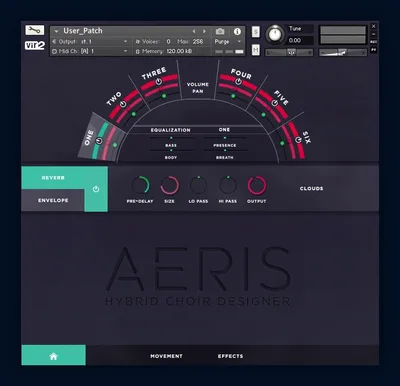
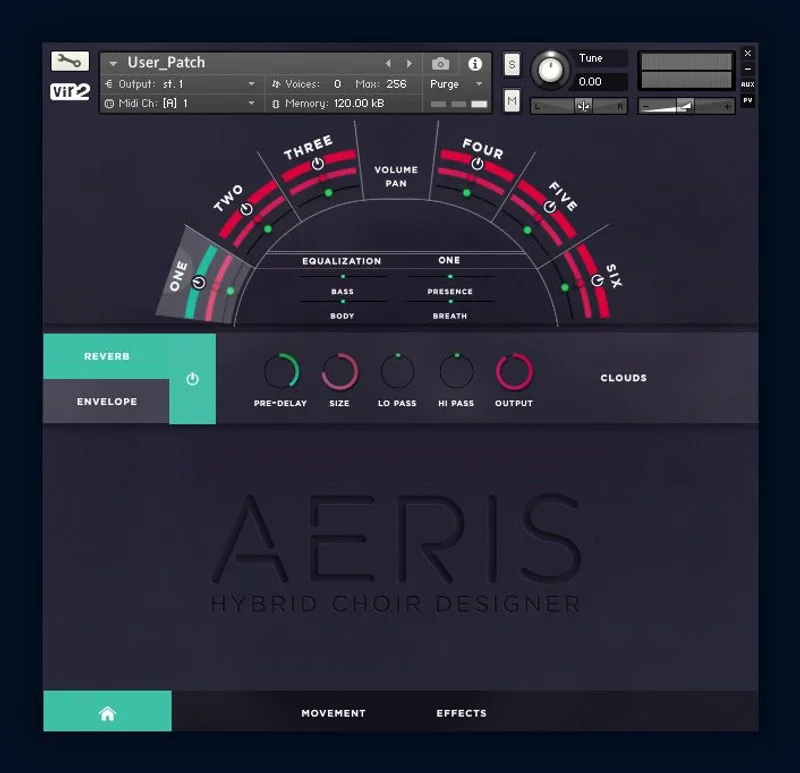
Aeris ships as three distinct Kontakt instruments: Performance, Pads, and User. The Performance patch is the core of the library. It houses six vocal groups, male choir, female choir, plus individual Bass, Tenor, Alto, and Soprano soloists, all recorded with true legato transitions and four vowel articulations: Ah's, Oh's, Ooh's, and Hums.
The Pads patch gives you 146 pre-built vocal pads sorted into six categories: calm, uplift, distorted, tension, motion, and effects. These were built by sound designers whose credits include Inception, The Dark Knight, and Mad Max: Fury Road. Not marketing filler. You can hear that pedigree.
The User patch opens the Aeris engine to any .wav or .aiff file you drag in. That's a bigger deal than it sounds, and we'll get to why.
One hard requirement before anything else: Aeris needs the full version of Kontakt 5.5.1 or higher. No Kontakt Player. No free pass.
The Good
We loaded the Soprano soloist with an Ooh vowel, set the mod wheel to blend vibrato depth, and played a slow descending minor line around C5. The legato transitions between notes are clean. No obvious splicing clicks, no pitch-smear artifacts between the intervals we tested (minor 2nd through minor 6th). At tempos below 80 BPM, this thing sits in the mix like a real singer.
That's satisfying. Genuinely. Most choir libraries at this price have legato that sounds like someone pressing a crossfade button. Aeris doesn't.
The modulation architecture is clever. Four simultaneous LFO slots, each assignable to volume, pan, high-pass, low-pass, bandpass, or pitch. Two independent step sequencers on top of that, running the same six modulation targets. We set one sequencer to pulse a slow high-pass sweep at 16th-note intervals and the other to stutter volume at dotted 8th notes. The resulting pad texture had movement without needing a single external plugin in the signal chain.
The eight built-in effects cover compressor, delay, chorus, flanger, distortion, stereo spread, reverb, and EQ. Not boutique-quality effects, but they're good enough that you won't need to bus everything out before it sounds finished.
The User patch is underrated. We dragged in a heavily processed brass stab, ran it through the Aeris LFO and sequencer engine, and got a breathing, evolving texture that sounded nothing like brass. That open sample-import architecture separates Aeris from closed-library competitors at a similar price.
The Not-So-Good
The mutual exclusivity problem is annoying and it's the first thing you'll hit in a real session. You cannot run a choir voice and a soloist voice simultaneously inside a single instance of the Performance patch. If you want a Soprano soloist sitting above a female choir on the same MIDI channel, you're loading two instances of the instrument. That's two Kontakt windows, two sets of CPU overhead, and two sets of effects chains to manage. It's a workflow tax.
We timed it. Adding a second Performance instance on a mid-spec session (32-track Logic Pro session, M2 MacBook Pro) pushed CPU from 14% to 23%. Not session-ending, but you'll feel it on older hardware.
The legato engine is also monophonic per group. Chords with true legato transitions between all voices simultaneously? Not happening. If you play a four-note chord and move it, you'll get four separate sample triggers, not four interlocking legato lines. For slow, single-line melodic writing it's brilliant. For dense choral harmony work, it's frustrating.
One more: the 10GB+ install is uncompressed. Budget your drive space accordingly. On an SSD, load times are fine. On an older spinning drive, the wait is real.
Compared to the Alternatives
Stacked against Spitfire Audio's Choir: Evolutions, Aeris has more sound design depth but less articulation variety. Choir: Evolutions captures more expressive performance nuance, including swells, clusters, and breath patterns that feel organic in ways Aeris doesn't reach. If pure realism is your goal, Spitfire wins.
Against 8Dio's Requiem Light, Aeris is more powerful but also more demanding. Requiem Light gets you into usable choral territory faster with less learning curve. Aeris rewards the time investment. Different tools for different workflows.
Versus EastWest Hollywood Choral, Aeris loses on raw sample depth and articulation count. Hollywood Choral has more recorded vowels, consonants, and dynamic layers. But it costs more, demands more CPU, and doesn't come with the Aeris sound-design engine or the User patch. If you're scoring for picture and need the most realistic choir possible, go EastWest. If you're producing hybrid scores or ambient music where designed textures matter as much as realism, Aeris is the smarter buy.
For more on what Kontakt instruments are worth your time, we've covered the category in depth.
Who Should Buy This
- ✅ Buy if you score to picture and need choir textures that move from realistic to atmospheric without switching libraries
- ✅ Buy if you already own full Kontakt and want a choir library with serious ITB sound design built in
- ✅ Buy if you want to run your own samples through a professional modulation and effects engine without building that architecture from scratch
- ❌ Skip if you only own Kontakt Player. Hard wall. It won't load.
- ❌ Skip if you need convincing polyphonic legato for dense SATB choral writing. This isn't that tool.
- ❌ Skip if you're on a laptop with limited SSD space and older CPU. The overhead and install size will make your sessions uncomfortable.
For more background on choosing sample libraries for film scoring, we break down what matters by budget and use case.
Score Breakdown
| Category | Score | Notes |
|---|---|---|
| Sound Quality | 4.0/5 | True legato is convincing at slow tempos; 146 sound pads have real film-composer DNA behind them |
| Value for Money | 4.0/5 | Three instruments for the price of one, plus an open User patch, makes the math work even at list price |
| Ease of Use | 3.5/5 | Learning curve is real; solo/choir mutual exclusivity requires workflow adjustments from day one |
| Features | 4.5/5 | Four LFOs, dual sequencers, 8 effects, and custom sample import put this well above most choir libraries feature-for-feature |
| CPU Efficiency | 3.5/5 | Single instance is manageable; stacking instances for simultaneous solo/choir work adds up fast |
| Overall | 4.0/5 | A choir library that earns its price through depth, not just prettiness, with one or two friction points you'll learn to live with |
Alternatives to Consider
Spitfire Audio Choir: Evolutions, More articulation variety and more natural expressive nuance than Aeris. Better choice if realism is the priority over sound design. Read our Spitfire choir library breakdown
8Dio Requiem Light, Simpler, faster to dial in, cheaper on sale. Less customization depth. Good starting point if Aeris feels like overkill for your current workflow. See how Requiem Light compares
Loot Audio Palm Mute Piano, Not a choir, but a great example of how Kontakt instruments can do something specific brilliantly. If you're browsing the Kontakt instrument space broadly, our Palm Mute Piano review shows what good specialization looks like.
Aeris: Hybrid Choir Designer is an easy buy on a sale day. At full price it is still defensible, but only if you will actually use the sound design depth and not just dial up the choir and walk away. Buy it on sale. Load the User patch with something weird. That's when Aeris stops being a choir library and starts being a creative tool.
Frequently Asked Questions
Does Aeris: Hybrid Choir Designer work with Kontakt Player?
No. Aeris requires the full version of Kontakt 5.5.1 or higher. It will not load in the free Kontakt Player. This is a hard system requirement, not a workaround situation. If you only have Kontakt Player, you'll need to upgrade before purchasing.
Can you use choir voices and solo singers simultaneously in Aeris?
Not within a single instance of the Performance patch. The choir groups and soloists are mutually exclusive per instance. To layer a Soprano soloist over a female choir, you'll need to run two separate instances of the instrument. It adds CPU overhead but it's a manageable workaround once you've set it up as a template.
What are the six pad categories in the Pads patch?
The 146 pads in Aeris are sorted into calm, uplift, distorted, tension, motion, and effects categories. They were designed exclusively using the choir and soloist sample content from the Performance patch, and the designers behind them have credits on major film scores. The distorted and tension categories are especially useful for trailer and hybrid-score work.
Is Aeris: Hybrid Choir Designer good for beginners?
It's not the most beginner-friendly library on the market. The interface rewards time investment, and the solo/choir switching workflow adds cognitive load early on. That said, the Pads patch is immediately playable with zero setup, so beginners can get usable results fast on that side of the library. The Performance and User patches take longer to master.