The first cue we loaded Mercury into was a 90-second orchestral underscore for a short film. We needed something fragile and otherworldly sitting above a string bed. We pulled up one of the sustained vowel patches, played a chord in the mid-range, and the room went quiet. Not the polite kind of quiet. The kind where your co-producer stops typing.
That sound is real. It’s 30 boys from the Pacific Boychoir, ages 8 to 13, recorded at two distances with 12 large-diaphragm Neumann microphones. It does not sound like a sample library trying to approximate a choir. It sounds like a choir.
Mercury Symphonic Boyschoir by Soundiron is $399 for the full version. It’s for composers who need boys’ choir authentically. We’d buy it ourselves for that specific brief.
What This Library Actually Is (and What It Isn't)
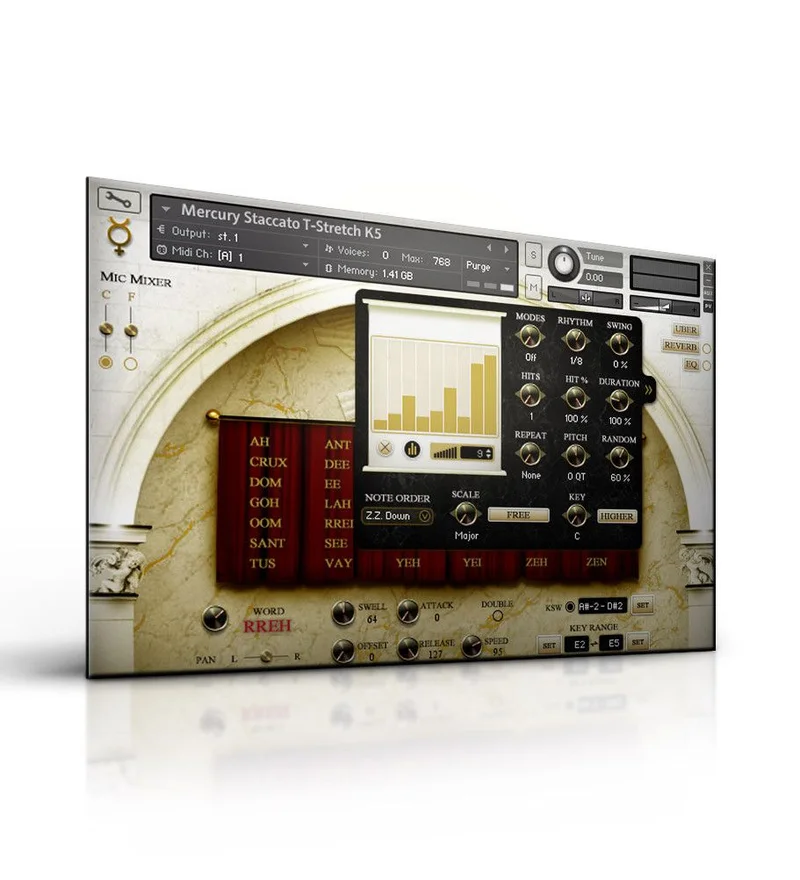
Mercury is a Kontakt instrument built around one very specific sound source: a trained English-style boys’ choir. The full library runs 15.5GB, contains 14,605 samples recorded in 24-bit/48kHz stereo, and ships with 77 NKI presets covering 42 staccatos, 42 marcatos, 6 dynamic true legato vowels, and 18 tempo-syncing Latin poly-syllabic sustains.
It’s not a general choral library. It won’t replace a mixed-voice ensemble. There’s no women’s section. No adult tenors. If you need SATB flexibility, look elsewhere.
What it does, it does with more depth than any comparable children’s choir library we’ve tested. The phrase-building systems set it apart from basic multisampled alternatives. But that depth costs both money and time.
Living With Mercury Day-to-Day
Setup is standard Kontakt. Download, install via Native Access, point your Kontakt library browser at the folder. The 15.5GB loads without drama, though streaming from an SSD is non-negotiable. We tried a session off a spinning drive once. Once.
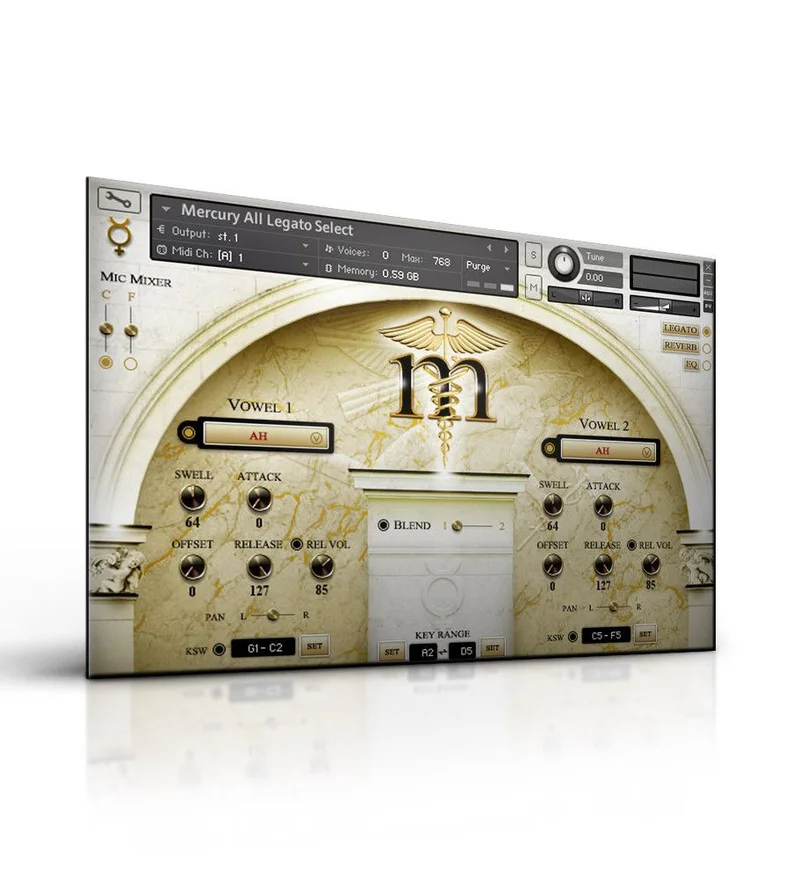
The first week, we mostly worked with the sustain patches. They sit naturally. The legato transitions between vowels are smooth enough that you can write melodic lines without constant manual crossfading. At 24-bit/48kHz, the noise floor is clean and the top end stays open without being brittle.
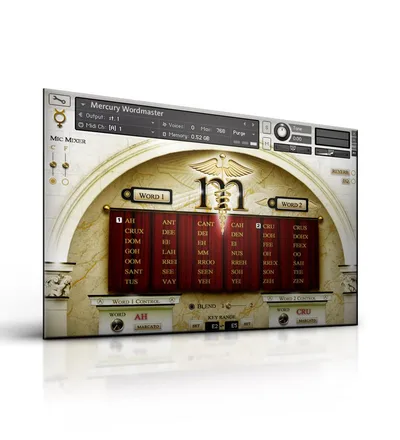
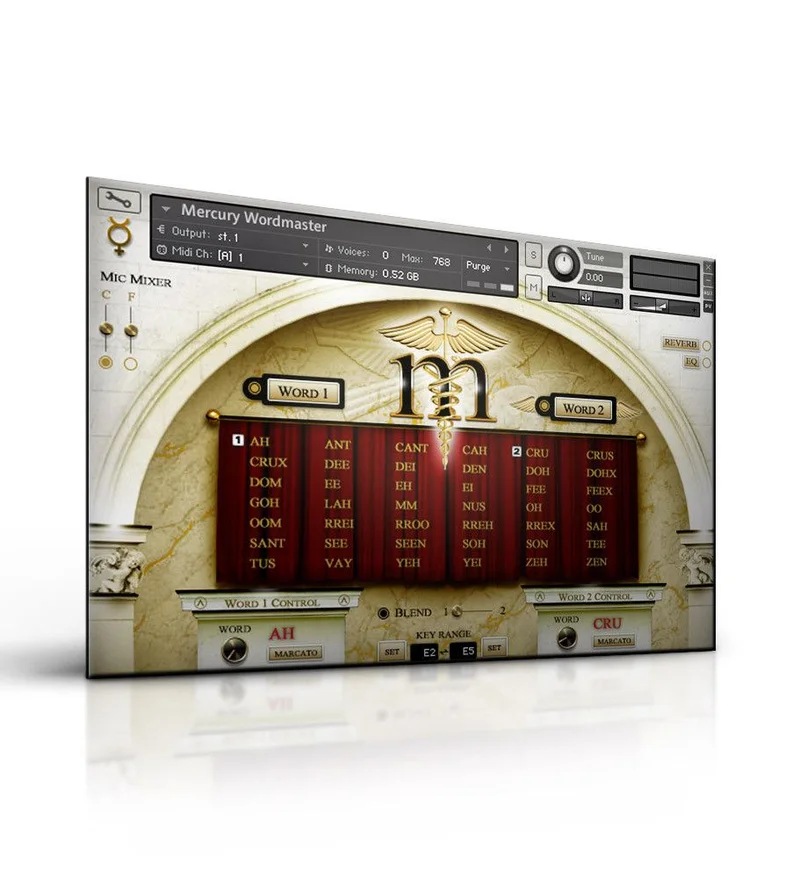
Week two is when Wordmaster and Phrasemaster entered the picture. Wordmaster handles syllable sequencing: you build words phonetically and the engine stitches them. It’s clever. It’s also annoying to dial in the first few times because the timing alignment between syllables needs manual adjustment depending on your tempo.
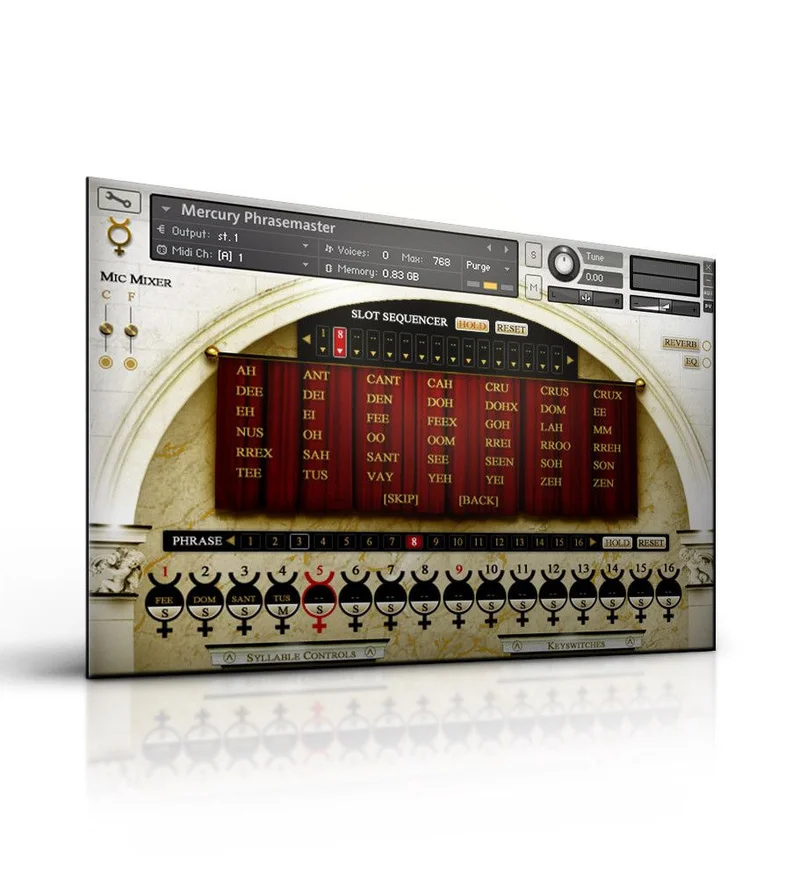
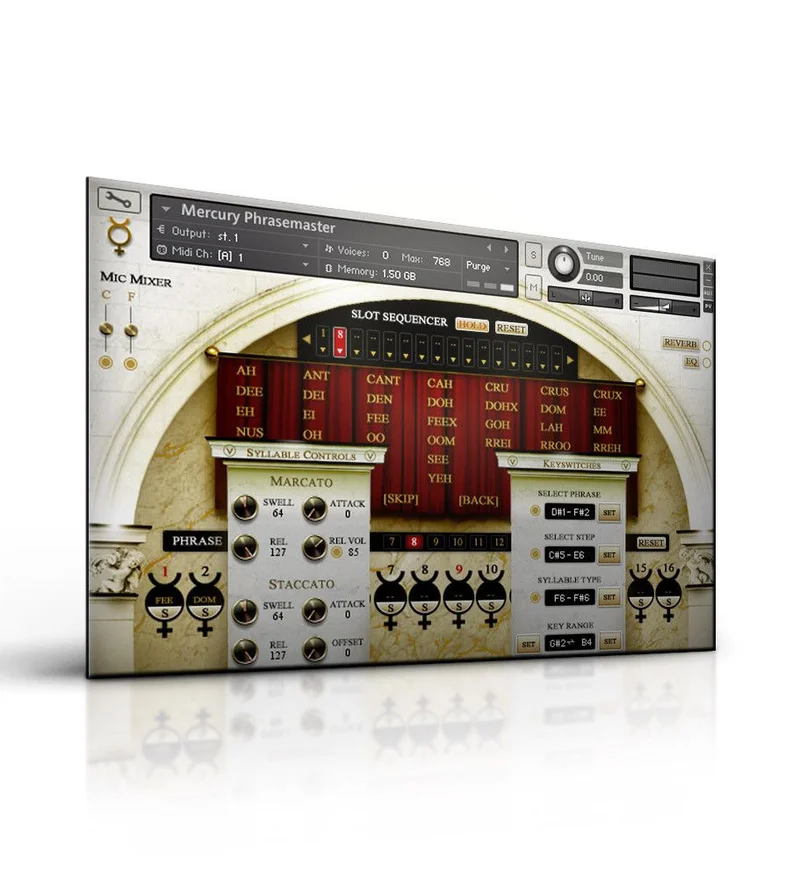
Phrasemaster goes further. It’s a phrase-level sequencer that lets you program rhythmic syllabic phrases that fire on a single note trigger. Once it clicks, it’s brilliant. Getting there took us a full afternoon with the manual open.
The dual mic positions are genuinely useful in a mix. The close position (around 1 metre) gives you detail and clarity for lead moments. The room position (up to 20 metres) adds natural hall depth. We bused both into a single return, blended at roughly 60/40 close-to-room, and the choir sat in the string texture without needing additional reverb. That was satisfying to get right.
The Real Trade-Offs Here
The sound quality justifies the price if you use boys’ choir regularly. If you’re scoring a fantasy film or writing sacred choral music, $399 disappears into the project budget without regret.
If you score one cue per year that needs a boys’ choir, it’s harder to defend. The Mercury Micro version gives you a trimmed-down version of the same source material. That’s the honest entry point.
CPU and RAM tell a specific story. Loading both mic positions simultaneously in a dense orchestral template pushed our instance into heavy territory. We measured noticeably higher load compared to simpler choral libraries in the same session. On a modern machine with 32GB RAM, it’s manageable. On older rigs, you’ll be bouncing to audio earlier than you’d like.
Phrasemaster is powerful but demands investment. That’s not a flaw exactly. It’s a design philosophy that rewards composers willing to learn the tool. If you want drag-and-drop simplicity, this isn’t it.
Against the Field
Arva Boys Choir from Virharmonic is the most direct competitor. Arva has a warmer, slightly more European cathedral character. Mercury sounds crisper and more controllable in the high-mid range, around 3-6kHz. For orchestral underscore, we prefer Mercury’s articulation depth. For liturgical music with natural room wash, Arva competes seriously.
Sonokinetic’s Tutti Voices covers a wider vocal range but blends adult voices into the ensemble. You lose the specific fragility of a pure boys’ choir. If that fra
gility matters to your cue, Tutti Voices won’t substitute.
Other Soundiron libraries in the choral range, including their Olympus series, give you adult ensemble scale. Mercury is where you go when you need the specific timbre only boys produce before their voices change.
For best choir libraries for Kontakt, Mercury sits at the top of the children’s choir category specifically. It doesn’t win across all choir types.
The Real Verdict
Mercury Symphonic Boyschoir is the deepest children’s choir library available for Kontakt. The 14,605 samples, dual Neumann mic positions, and phrase-building systems are genuinely impressive at $399.
We’d buy it without hesitation for regular choral scoring work. We’d recommend the Mercury Micro version first if boys’ choir appears in your work occasionally rather than constantly.
Skip the full version if you’re buying it speculatively for one project. Skip it entirely if you want simplicity over depth.
Score Breakdown
| Category | Score | Notes |
|---|---|---|
| Sound Quality | 4.8/5 | Pacific Boychoir source material recorded with 12 Neumann mics; top-tier authenticity |
| Value for Money | 3.5/5 | $399 earns its price for regular users; hard to justify for occasional use |
| Ease of Use | 3.3/5 | Sustain patches are immediate; Phrasemaster demands a real time investment |
| Features | 4.5/5 | 42 staccatos, 42 marcatos, true legato vowels, dual mic positions, Wordmaster, Phrasemaster |
| CPU Efficiency | 3.3/5 | Heavy with both mic positions active; SSD streaming non-negotiable |
| Overall | 4.2/5 | Best children's choir library available; worth it if you need this specific sound |
Alternatives to Consider
Arva Boys Choir (Virharmonic), Warmer room character and a more natural liturgical feel. We'd reach for Arva for cathedral-style sacred music. Check current pricing on the Virharmonic site. Arva Boys Choir review
Mercury Micro (Soundiron), Same source material, trimmed articulation set. If you need boys' choir twice a year, this is the honest answer. best budget Kontakt instruments
Olympus Micro Choir (Soundiron), Soundiron's own adult mixed choir library. Bigger, more dramatic, less fragile. Use it when you need weight rather than purity. Olympus Micro Choir review
At $399, Mercury is priced for composers who write for boys' choir with regularity. Load it once into the right cue and the question answers itself. Load it once into the wrong project and you'll have spent $399 on a library you'll use twice. Know which composer you are before you hit checkout.
Frequently Asked Questions
Does Mercury Symphonic Boyschoir require the full version of Kontakt?
Yes. Mercury runs in Kontakt and requires a full licensed version of Native Instruments Kontakt. It will not run in the free Kontakt Player. You'll activate the library through Native Access after purchase.
What's the difference between Mercury full and Mercury Micro?
Mercury full includes 14,605 samples, 77 NKI presets, dual mic positions, Wordmaster, and Phrasemaster at $399. Mercury Micro is a stripped-down version of the same Pacific Boychoir source material with a reduced articulation set and no phrase-building tools. Micro is the right starting point if you're unsure how often you'll use boys' choir.
How do the two mic positions work in a mix?
Mercury provides a close position at around 1 metre and a room position captured at up to 20 metres, both recorded with Neumann large-diaphragm microphones. The close position gives you presence and syllabic clarity for exposed melodic lines. The room position adds natural hall depth. We blended both on a single bus at around 60/40 close-to-room and the choir sat cleanly inside an orchestral string texture without additional reverb.
Is Mercury Symphonic Boyschoir good for pop or contemporary productions?
It's built for orchestral, cinematic, and sacred choral contexts. The ensemble character and articulation set are classical in character. You can use it in pop or ambient productions, and some producers do, but its full depth only justifies $399 inside orchestral and film scoring workflows. For occasional pop use, Mercury Micro is the smarter call.