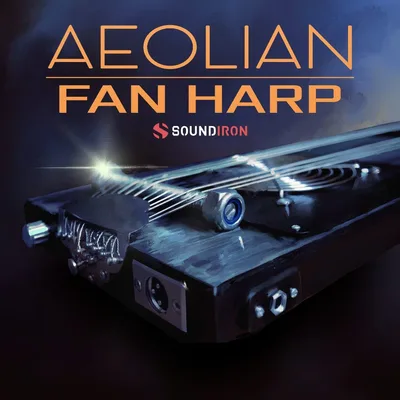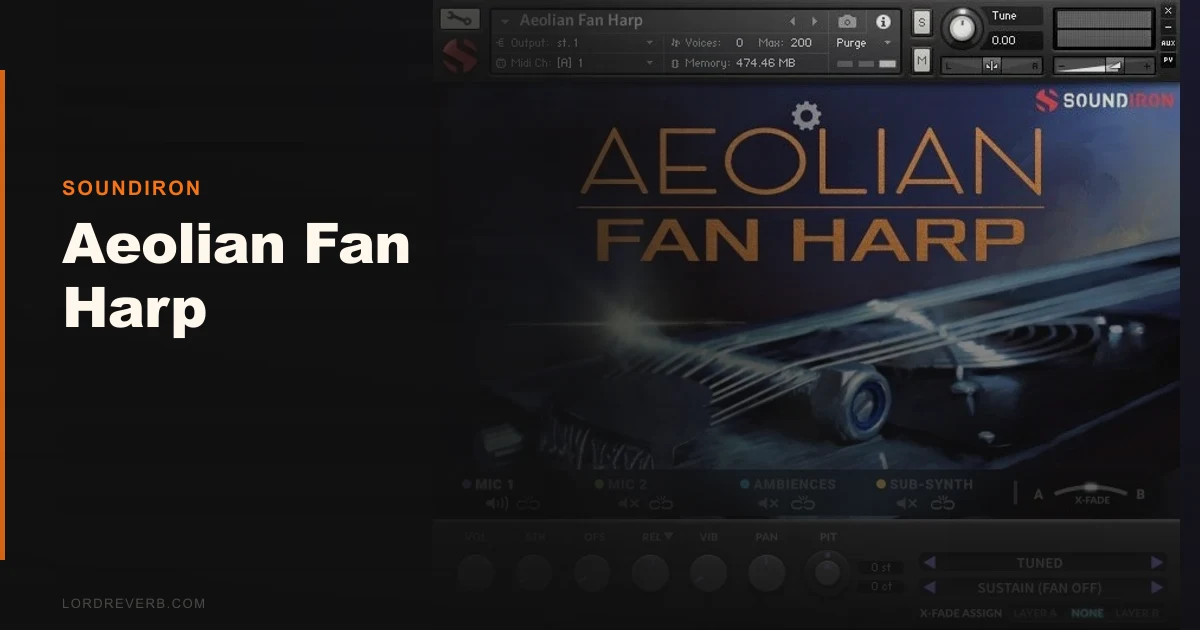
The Aeolian Fan Harp from Soundiron is a legitimately strange Kontakt instrument built around a 12-string hollow-body guitar fitted with a 120mm PC fan and electric guitar pickups, and at $39 it costs less than most cinema composers spend on coffee in a week.
We loaded it up mid-session while scoring a short film. We needed something that breathed. Something that moved on its own. We hit the first fan-activated patch and stopped working for about two minutes to just listen.
That's not a sales pitch. That's what happened.
But this is a niche tool with a hard ceiling, and depending on what you're building, it's either a clever addition to your rack or 14 GB of space you'll regret allocating.
A Harp That Plugs Into the Wall
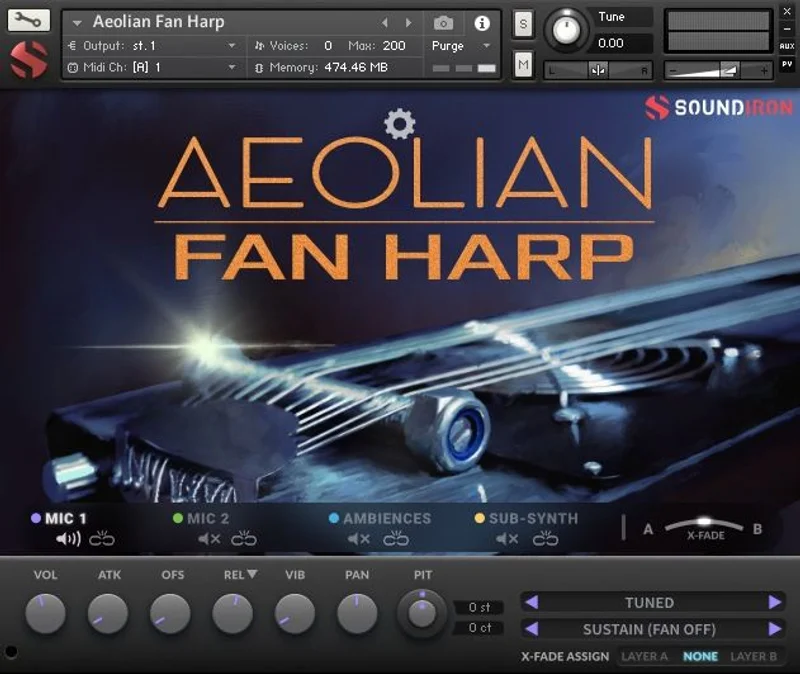
The Aeolian Fan Harp is not a playable instrument in any conventional sense. It's a sampled object: a custom 12-string hollow-body built by Dust Bowl Guitars over three months, with steel-wound strings and a 120mm PC fan mounted in the body. Turn the fan off, and you get a baritone electric guitar tone. Turn it on, and the fan vibrates the strings continuously, generating drones and clusters you can't produce with a bow or a pick.
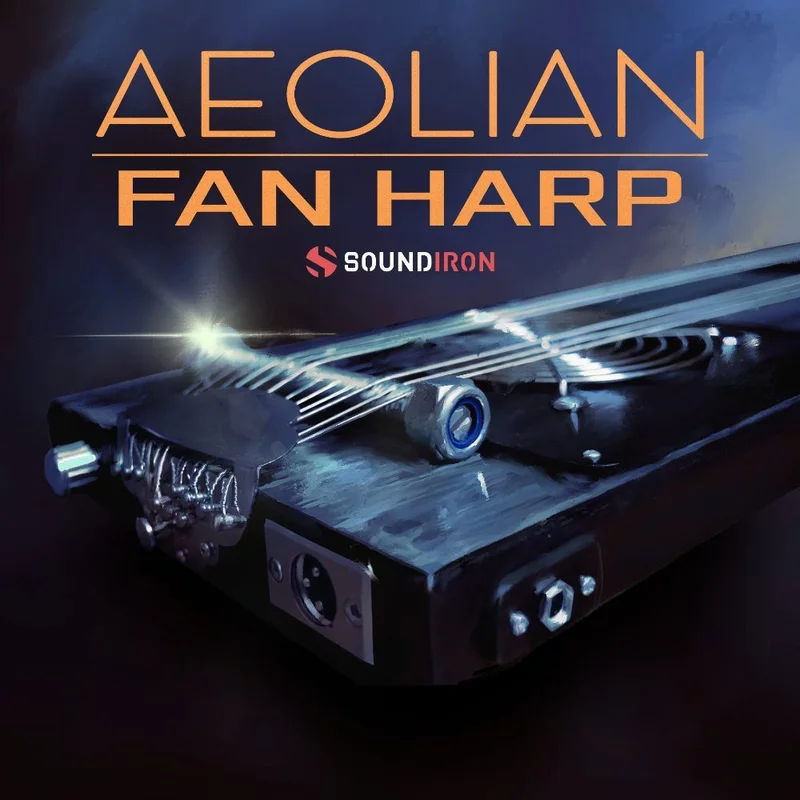
Soundiron had John Valasis and Konstantinos Sakkas sample the whole thing at close stereo and direct pickup positions. The result is nearly 14 GB of audio packed into 20 hand-crafted patches.
This is not a replacement for a traditional harp library. It's not trying to be. If you need Celtic harp or orchestral pedal harp, look elsewhere. This is a sound design weapon built for atmosphere, tension, and slow-moving cinematic drones.
It does that well. It does almost nothing else.
Living With the Fan Harp Day to Day
Setup is painless if you already own full Kontakt 5.5 or higher. Drag it in, let the samples load, pick a patch. We were up and running in under five minutes.
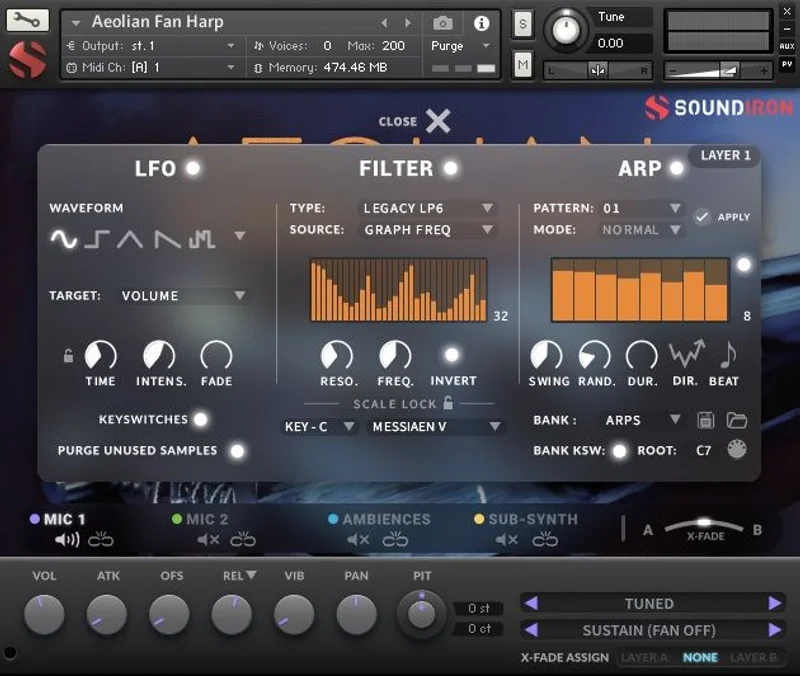
The frustrating part: Kontakt Player support is absent. Zero. If you bought the free version of Kontakt thinking it would cover you, it won't. That's a genuine barrier for producers just getting started with Kontakt instruments, and Soundiron should put that warning in larger text on the product page.
Once you're inside, the modular FX rack is where most of the shaping happens. We ran one of the fan-on patches through the built-in convolution reverb, pushed the attack up, and got a slow swell that sat behind a string section without fighting it. No additional processing needed from our session chain.
The close stereo position captures more room and string buzz. The direct pickup line out sounds tighter and sits further back in a mix without carving. We found ourselves using the direct signal for dense scores and the close mic for anything that needed presence.
Automation works cleanly. We drew in a slow fan speed ramp across 16 bars and the transition from dry baritone to full drone happened without clicks or phase weirdness. That impressed us.
The 20 patches do thin out quickly, though. For a 14 GB library, we'd love to see 40 or 50 patches. The raw sample content is rich enough to support more variety. This feels like a first-pass release that could have gone further.
The Trade-Offs Worth Knowing
At $39, you're not paying for breadth. You're paying for a single, strange instrument that does one thing brilliantly and not much else.
The fan-on drone mode is the reason to buy this. The clusters that emerge when the 120mm fan spins against steel-wound strings produce a sustained, organic texture that's genuinely hard to fake with synthesis. We layered it under a cello section recording at around -18 dBFS and it blended without asking for anything.
The baritone guitar tone without the fan is underwhelming. It's clean and recorded well, but you're not buying this for that. If the fan mode disappeared, this library would not be worth the storage.
CPU draw is light to moderate. We ran three instances simultaneously in a 64-sample buffer session without dropouts. No complaints there.
The Kontakt Player restriction is the real trade-off to weigh. If you don't already own full Kontakt, add the cost of that software on top of this instrument. Suddenly the $39 sticker price tells a different story.
Against the Field
For drone and cinematic texture at this price, the closest comparison we'd reach for is the Soundiron M1 Garand Rifle, which is a different beast but shows Soundiron's skill at turning unusual physical objects into usable cinematic tools. The Garand has more tonal variety across its patches.
If you want more playable wind and string drone content, Spitfire LABS Frozen Strings is free
and covers some adjacent ground, though it lacks the raw electric character of the Fan Harp’s direct pickup tone.
For outright cinematic texture design, Native Instruments Straylight costs significantly more but gives you generative, evolving pads with far more patch depth. If you're scoring regularly and need a workhorse, Straylight wins. If you want something weird and specific on a budget, the Fan Harp wins.
The Real Verdict
We'd buy this. We did buy this. On sale, the question isn't whether it's worth it. It clearly is, assuming you own full Kontakt.
That assumption is the caveat that matters. If you're running Kontakt Player, this is a hard skip until you upgrade.
For working composers who have full Kontakt and score anything adjacent to tension, ambience, or experimental film music: add it, load the fan patches, and find a spot for it. You'll use it more than you expect.
If you need a versatile multi-patch library or something playable and melodic, this is the wrong tool.
Score Breakdown
| Category | Score | Notes |
|---|---|---|
| Sound Quality | 4.0/5 | Fan-on drones are organic and genuinely difficult to replicate elsewhere; dry baritone tone is average |
| Value for Money | 4.0/5 | 14 GB of unique content at a fair price, but Kontakt Player lockout may double the real cost. |
| Ease of Use | 3.5/5 | Intuitive once loaded; no manual required; Kontakt dependency is the only friction point |
| Features | 3.0/5 | Only 20 patches for 14 GB of raw material feels undercooked; FX rack and automation are solid |
| CPU Efficiency | 4.0/5 | Light draw; multiple instances stack without drama at normal session buffer sizes |
| Overall | 3.8/5 | Brilliant in its lane, narrow in scope, gated by a Kontakt dependency that inflates the real cost |
Alternatives to Consider
Spitfire LABS Frozen Strings is free, works in Kontakt Player, and covers some of the same slow atmospheric territory. It lacks the electric grit and fan-driven drone of the Fan Harp, but if you're not sure whether you need this type of texture, start there.
Native Instruments Straylight costs considerably more and requires the full NI ecosystem, but gives you generative sound design far beyond 20 patches. Working composers who score regularly will find better long-term value there.
Soundiron's own M1 Garand Rifle is a better demonstration of the developer's range and gets our recommendation if you want to test Soundiron's object-based sampling before committing to the Fan Harp.
The Fan Harp earns its place for one reason: nothing else on the market sounds like a 120mm PC fan spinning against steel-wound strings on a hollow-body baritone. On sale, it's a clever buy. At $39, it's still defensible. Without full Kontakt already in your arsenal, it's a skip.
Frequently Asked Questions
Does the Aeolian Fan Harp work with Kontakt Player?
No. This is one of the hardest restrictions to miss and the most annoying to discover after purchase. The Fan Harp requires the full version of Kontakt 5.5 or higher. Kontakt Player will not load it. If you only have the free Player, you'll need to upgrade before this library functions.
What is an Aeolian harp and how does this instrument relate to it?
An Aeolian harp is an ancient instrument designed to be played by wind rather than human hands, named after Aeolus, the Greek god of wind. Dust Bowl Guitars built this modern version using a 12-string hollow-body guitar body with a 120mm PC fan mounted inside to vibrate the steel-wound strings continuously. The fan replaces the wind, but the physics are similar.
Is the Aeolian Fan Harp useful for non-cinematic music production?
It's a stretch. The fan-on drone patches are narrow in application: they work for tension beds, ambient music, experimental sound design, and slow-moving film scores. For pop, hip-hop, EDM, or anything requiring melodic playability and tonal variety, this library won't serve you. Spend the $39 elsewhere.
How large is the Aeolian Fan Harp library and how long does it take to load?
The library sits at nearly 14 GB. Load times on a modern SSD are around 15 to 25 seconds depending on which patch you're opening. We noticed no meaningful difference in load time between the fan-on and fan-off patches. Running it from a spinning HDD will be noticeably slower and we'd strongly recommend SSD installation.