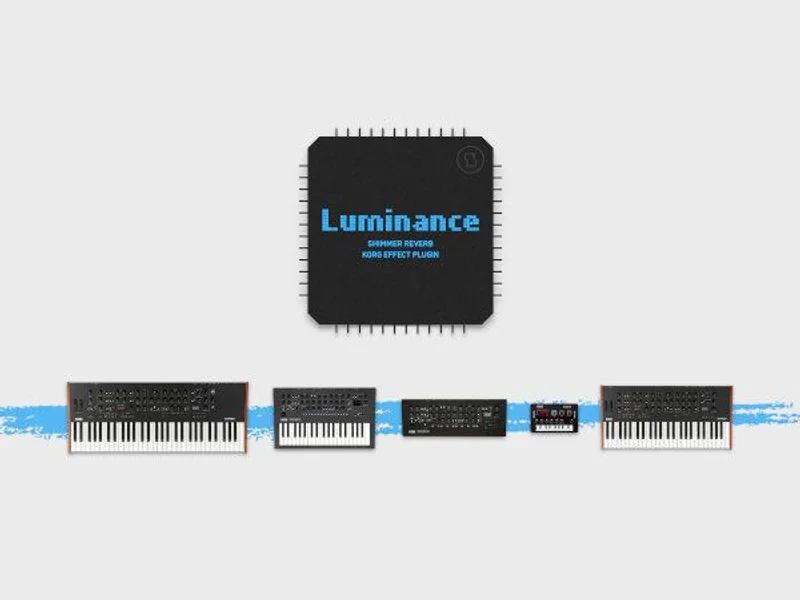
KorgLuminance is a shimmer reverb expansion for select KORG hardware synthesizers, and at $19 it's a genuinely compelling buy for the right person. The regret hits when you're the wrong person. Specifically: you bought this thinking it loads into your DAW, or works on your Arturia, or runs on any KORG other than the prologue, minilogue xd, NTS-1, NTS-1 mkII, NTS-3, or microKORG2. It doesn't. That list is the whole world KorgLuminance lives in. If your hardware's on it, you get a feedback delay network reverb with a granular pitch shifter that gradually shifts your reverb tail upward or downward, plus chorus-style time modulation for movement. Owners building pads and drones love this thing. Everyone else should stop reading now.
Who Ends Up Regretting This
The buyers who feel burned are almost always people who didn't clock the hardware restriction before checkout. KorgLuminance is part of the Sinevibes KorgFX Collection. It runs on KORG hardware. Full stop. No AU. No VST3. No AAX. If you're trying to load this into Ableton or Logic, that's not a workflow limitation you work around. It's a hard wall.
First-generation KORG Logue owners also need to manage expectations. Stack KorgLuminance with a few other heavy effects on that hardware and you may hit performance limits. It's not a dealbreaker, but it's annoying if you built your patch assuming it'd run clean alongside everything else.
And if you're after a dramatic riser or a sharp, attention-grabbing special effect, this isn't that. The character here is slow, evolving, atmospheric. Beautiful, honestly. But not flashy.
What Owners Actually Say
The clearest thing owners keep saying: this sounds superior to KORG's built-in shimmer options. That's a meaningful statement. KORG's Submarine and Riser effects get described as thinner and more gimmicky, more suited to one-off moments than to sustained texture work. KorgLuminance, by contrast, gets called thick and usable. Those aren't empty words here. Owners are specifically using it for pads and drones, which is exactly the context where a thin reverb falls apart.
The lag filters get mentioned a lot. Twist a knob live and you get a smooth parameter sweep, no crackling, no zipper noise. That matters if you're performing. It sounds like a small thing until you've heard a reverb tail crack mid-phrase.
The one honest complaint from owners involves first-gen Logues under heavy load. Some users find that layering KorgLuminance with other processor-intensive effects pushes the hardware into instability. Worth knowing before you build that patch.
What You Actually Get
The architecture is a feedback delay network combined with a granular pitch shifter and chorus-style time modulation. That combination is what creates the shimmer: a reverb tail that doesn't just decay, it drifts upward or downward in pitch as it fades. Push it in one direction and your chords start to feel like they're rising into the room. Flip the direction and there's a slow, downward melt instead.
Each parameter has an individually mapped control for the KORG devices, and the whole thing is optimized device by device for maximum stability. That's not marketing. It means Sinevibes calibrated performance separately for each piece of hardware in the compatible list, rather than shipping one generic build.
What you don't get: any path outside KORG hardware. No trial that runs in a DAW. No demo mode on other platforms. If you want to hear it before buying, you're relying on owner demos and YouTube footage of the hardware running it.
The Smarter Route
If you own compatible KORG hardware and want something different from shimmer, Sinevibes makes two alternatives worth considering. Hollow is described as a vast space reverb, which suggests a more conventional large-room character without the pitch movement. Isomer goes a different direction entirely as an ensemble delay effect, so if your pads need rhythmic texture rather than harmonic shimmer, that's the one to look at.
If you're comparing KorgLuminance directly to KORG's built-in Submarine or Riser effects, owners are consistent: this is thicker and more musical for sustained work. The built-ins work for quick, special-effect moments. KorgLuminance is for building a background layer you can sit a whole track on top of.
At $19, there isn't really a cheaper route that does what this does on KORG hardware. Either you want this specific sound or you don't.
Buy or Wait?
Buy it if you own a compatible KORG and you're frustrated with how thin the built-in shimmer sounds. At $19, you're getting a genuinely superior harmonic reverb that owners describe as one of the better sounds they've pulled from their hardware.
Wait, or skip entirely, if you're on a first-gen Logue and already running heavy effect chains. Test your patch headroom first. And if your hardware isn't on the compatible list, this isn't a question at all. Hard pass.
Specs & Technical Details
| Developer | Sinevibes |
| Price | $19 |
| Plugin Format | N/A (KORG hardware expansion only) |
| OS Support | N/A |
| Activation | N/A |
| CPU Usage | N/A |
| Trial Available | N/A |
| Version Reviewed | N/A |
| Compatible Hardware | KORG prologue, minilogue xd, NTS-1, NTS-1 mkII, NTS-3, microKORG2 |
| Collection | Sinevibes KorgFX Collection |
Score Breakdown
| Category | Score | Notes |
|---|---|---|
| Sound Quality | 4.5/5 | Owners consistently rate it above KORG's native shimmer options for thickness and musicality |
| Value for Money | 4.0/5 | At $19, the gap over built-in effects is audible and meaningful for pad and drone work |
| Ease of Use | 4.0/5 | Per-device parameter mapping and lag filters make live adjustment smooth and noise-free |
| Features | 4.0/5 | Bidirectional pitch shift plus chorus modulation is a clever combination; nothing wasted |
| CPU Efficiency | 3.5/5 | First-gen Logues can struggle under heavier load when stacking effects |
| Overall | 4.2/5 | Brilliant for the right KORG hardware; completely irrelevant to everyone else |
Alternatives to Consider
KORG Submarine / KORG Riser (built-in)
If you're not ready to spend anything extra, these are already on your hardware. Owners describe them as thinner and better suited to one-shot special effects than sustained texture. Good for quick moments. Not the same character as KorgLuminance.
Sinevibes Hollow
If you want vast reverb space without the upward pitch drift, Hollow is the other option in the Sinevibes ecosystem. Same hardware compatibility. Different character: big room rather than harmonic shimmer.
Sinevibes Isomer
If your pads need rhythmic movement rather than harmonic shimmer, Isomer is an ensemble delay effect that covers different ground. Worth considering if your sound design leans more toward textured delay than reverb wash.
KorgLuminance is a satisfying and underrated tool for a narrow but passionate group of hardware synth owners. If you're building pads on a compatible KORG and you've hit the ceiling of what the built-in reverbs can do, this is the logical next step. That pitch-shifting tail, drifting upward behind a slow chord voicing, is the kind of sound you'll wish you had sooner. Just don't buy it for hardware it doesn't run on. The list is short, the effect is real, and the price makes the decision easy if you're in that group.
Frequently Asked Questions
Does KorgLuminance work as a DAW plugin in Ableton, Logic, or Pro Tools?
No. KorgLuminance is a hardware expansion for specific KORG synthesizers, not a DAW plugin. It runs on the prologue, minilogue xd, NTS-1, NTS-1 mkII, NTS-3, and microKORG2 only. There's no VST3, AU, or AAX version.
Can I use KorgLuminance on a first-generation KORG Logue without problems?
You can use it, but some owners report that stacking KorgLuminance alongside other processor-intensive effects on first-gen Logues causes performance issues. If you're building a complex effects chain, test your patch carefully before committing to a live set or session.
How is KorgLuminance different from KORG's built-in Submarine and Riser effects?
Owners consistently describe the built-in Submarine and Riser as thinner and more suited to quick special-effect moments. KorgLuminance uses a feedback delay network with a granular pitch shifter that gradually shifts the reverb tail up or down in pitch. The result is thicker, more usable for sustained pads and drones, and closer to a background harmonic layer than a one-shot effect.