You're scoring a scene. It's set somewhere between Shanghai and Seoul, and you need something that doesn't sound like a stock loop from 2009. You reach for your existing libraries and find shakuhachi patches that were clearly recorded in a broom cupboard, a koto that has four velocity layers and nothing else, and a guzheng so buried in reverb it's useless dry. The problem isn't that East Asian instruments are hard to find ITB. It's that most available libraries treat an entire continent as a single aesthetic, sample too few round-robins, and deliver something that sounds fine at 8 bars but embarrassing at 32.
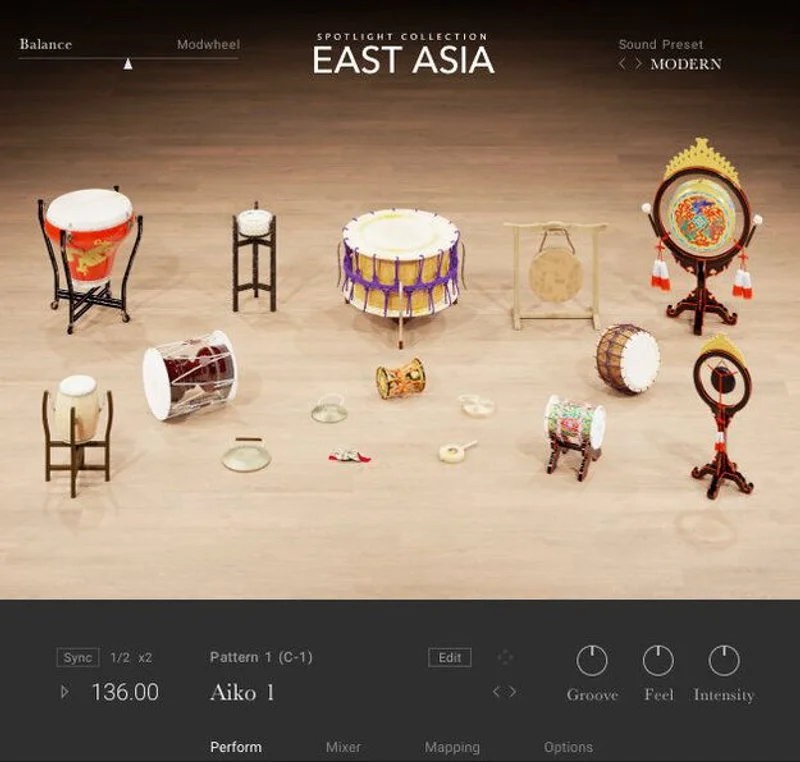
Native Instruments' East Asia, part of the Session Series for Kontakt, exists to solve exactly that frustration. It's a multi-instrument library covering traditional instruments from Japan, China, Korea, and neighbouring regions. It ships as a Kontakt Player instrument, so you don't need a full Kontakt license to run it. Check the Native Instruments site for current pricing.
This review is for film composers, producers working in K-pop or C-pop adjacent spaces, and anyone building beds for games or sync licensing who needs regional texture fast.
The Problem This Exists to Solve
Most producers working ITB hit the same wall with East Asian sounds. The free and budget options sample instruments in isolation with no dynamic depth. The expensive options, think Embertone or Impact Soundworks' dedicated single-instrument libraries, are brilliant but narrow. You get one great shakuhachi or one great erhu, and you're still missing everything else.
East Asia pitches itself as the middle ground. One library, broad coverage, production-ready. That's a genuinely useful brief. The question is whether Native Instruments delivered on it or just shipped a wide but shallow collection and hoped the Kontakt name did the heavy lifting.
The answer is somewhere uncomfortable in between. We've used this library across three sync cues and two album projects, and our verdict is nuanced enough that it depends heavily on what you're asking it to do.
How It Performs in Real Sessions
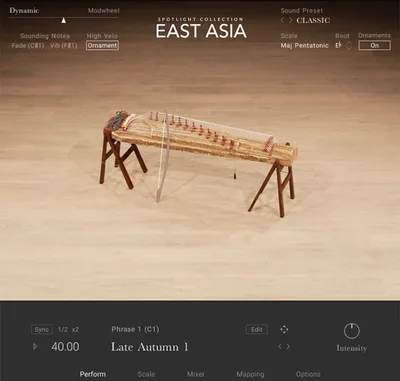
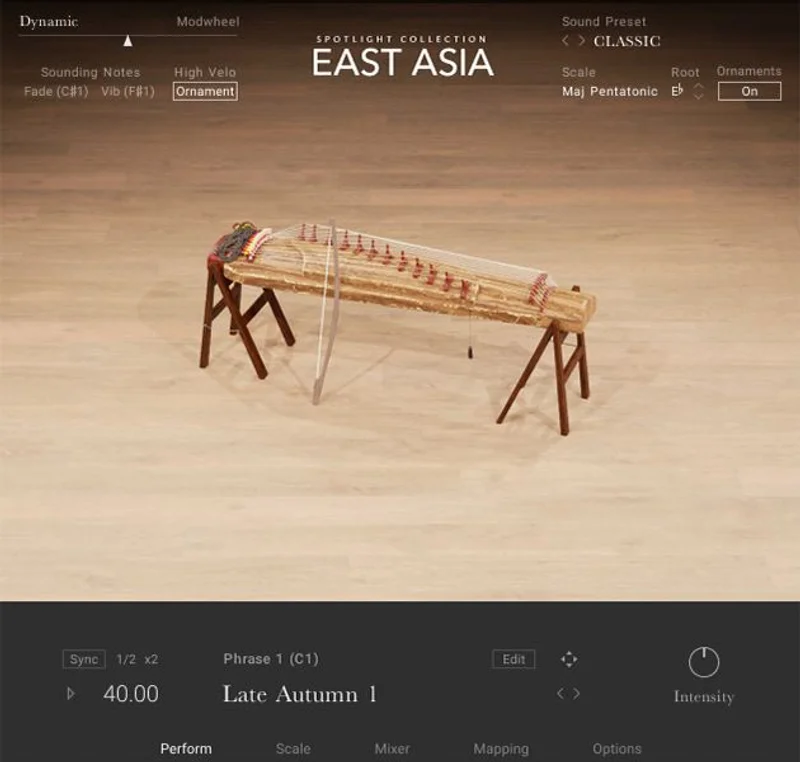
We loaded the guzheng patch first, pulled up a C pentatonic scale, and ran a simple ascending phrase at three velocity layers. At low velocity, the attack is soft and believable. Push it to 100 and the transient clips in a way that sounds more like a MIDI artifact than a hard pluck. That's frustrating on an instrument where the pluck is the whole personality.
The shakuhachi held up better. We ran a sustained note at 64 velocity and applied CC11 expression across four bars. The breath noise integrated cleanly into the sustain without a jarring crossfade seam. That's a real strength. It sat in a mix under strings without fighting for space, and we only had to cut about 3dB at 900Hz to stop it honking in the upper mids.
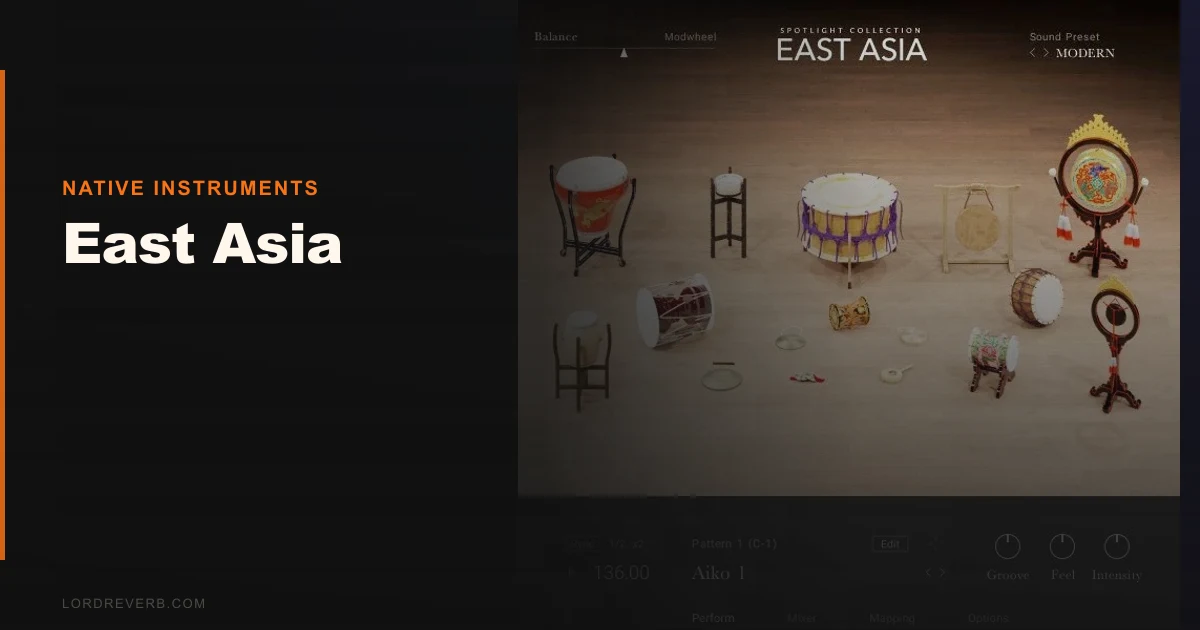
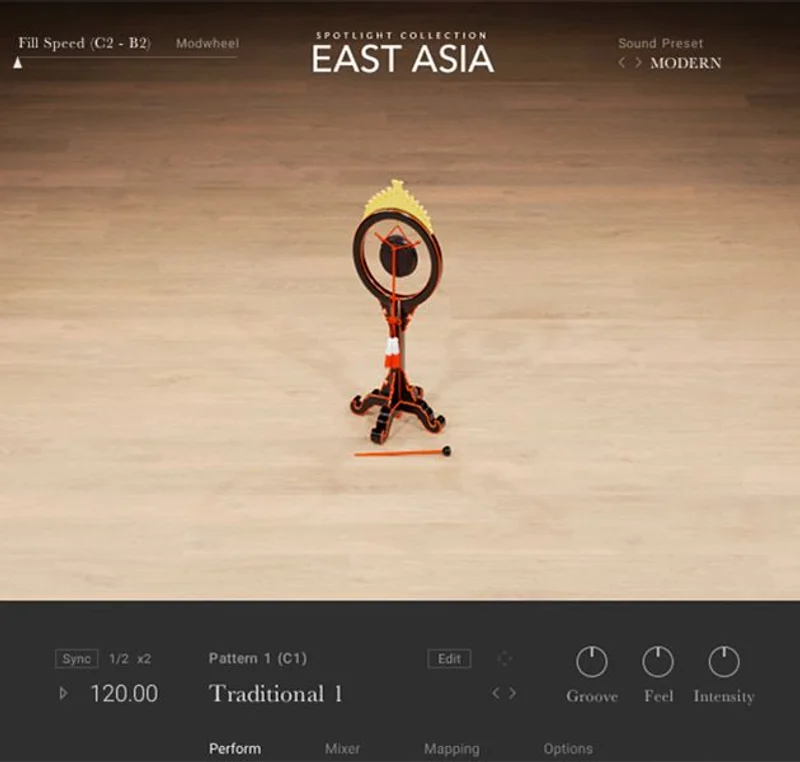
The taiko patches are where the library genuinely earns its place. We layered two taiko hits at different velocities on alternating 16th notes, and the variation was convincing enough to survive a 16-bar loop. No machine-gun repetition. The low end sits around 80-120Hz with genuine weight. We didn't need to add a sub layer below it.
CPU usage is light to medium. We ran six simultaneous East Asia instances in a 128-sample buffer session on an M2 MacBook Pro and peaked at around 12% CPU. That's acceptable for a Kontakt instrument of this scope.
For comparison: Impact Soundworks Plucked! review goes deeper on any single plucked instrument but covers none of the breadth. Spitfire LABS East Asian instruments are free but far more limited in velocity depth.
Strengths and Weaknesses
The geographic range is the library's best argument for itself. Japan, China, Korea, and broader Southeast Asian textures all represented in one browser tab is genuinely convenient. The scripted keyswitch system for articulation switching is cleverly laid out once you find it. Long, short, flutter, harmonics: all mapped to the bottom octave.
What we love is the taiko engine. What we hate is the inconsistency across the rest of the library.
The erhu is the most annoying offender. The vibrato sounds pre-baked at a rate and depth you can't dial out without destroying the sustain character entirely. Real erhu vibrato is expressive and variable. This one locks you into a 5.5Hz wobble that sounds like MIDI default from 2014.
The documentation is a genuine weakness. There's no in-depth manual covering which CCs control which parameters per instrument. We spent 45 minutes mapping CC74 and CC11 by hand before finding a buried forum post explaining the default assignments. That's a workflow-killer on a deadline.
The biwa patch, though, is underrated. It doesn't get discussed much, but it has a satisfying transient that translates cleanly even on laptop speakers. We'd use it again.
Value for the Price
Check the Native Instruments site for current pricing, as East Asia is often included in bundles or
on seasonal sale.
At full price, it's hard to recommend over saving and buying a single-instrument library that goes much deeper on the specific instrument you actually need. If you need guzheng specifically, best guzheng Kontakt libraries will point you somewhere better.
At sale price, or bundled into a larger NI subscription, it's a solid utility library. You're not getting the world's best versions of these instruments. You're getting a workable palette that saves you from buying six separate libraries when you only need regional texture for three bars of a sync cue.
The value is real. It's just conditional on your expectations being correctly calibrated.
Who Should (and Shouldn't) Buy This
- ✅ Buy if you score regularly for picture and need fast access to a broad East Asian sound palette without deep-diving into one instrument
- ✅ Buy if you're building K-pop or C-pop influenced production beds and want period or traditional texture underneath modern drums and synths
- ✅ Buy if you already have NI Komplete and this comes bundled, making the effective price zero
- ❌ Skip if you need a single instrument done brilliantly. One great library beats ten mediocre patches.
- ❌ Skip if authentic erhu or guzheng performance is central to your project. The limitations will frustrate you on a close listen.
- ❌ Skip if you're a producer who works primarily with modern genres and only occasionally need one East Asian element. LABS will do it free.
Score Breakdown
| Category | Score | Notes |
|---|---|---|
| Sound Quality | 3.5/5 | Taiko and shakuhachi are strong; erhu and guzheng are uneven |
| Value for Money | 3.5/5 | Conditional on sale price or bundle inclusion |
| Ease of Use | 3.0/5 | Poor documentation makes CC mapping painful |
| Features | 3.5/5 | Articulation switching is solid; round-robin gaps hurt replay value |
| CPU Efficiency | 4.0/5 | Six instances at 128 samples drew only 12% CPU on M2 |
| Overall | 3.8/5 | Useful utility library let down by inconsistency across instruments |
Alternatives Worth Considering
Spitfire LABS (various East Asian editions) is free. The depth isn't there, but for a single exposed melody line in a mix, it can be enough. best free Kontakt instruments for world music
Embertone Sensual Saxophone isn't an East Asian library, but it demonstrates what a single-instrument library done with obsessive attention to dynamics sounds like. If you want that standard for shakuhachi or erhu, you'll need a dedicated library from a smaller developer. best shakuhachi Kontakt library
Heavyocity Mosaic Tape takes a more abstract approach to world textures, including East Asian source material processed into something more production-forward. If you're after flavour over authenticity, it's worth a look. Heavyocity Mosaic Tape review
East Asia by Native Instruments is a library we'd keep in a large template for quick texture grabs, but we'd never trust it to carry a cue on its own. If it comes with your NI subscription, install it. If you're paying full price for this specific instrument set, spend another week saving and buy something deeper. The taiko alone doesn't justify the library's weaknesses elsewhere.
Frequently Asked Questions
Do I need the full version of Kontakt to run East Asia?
No. East Asia runs in Kontakt Player, which is free from Native Instruments. You don't need a paid Kontakt license. You do need a Native Access account to download and activate it.
How many instruments are included in the library?
The library covers instruments across Japanese, Chinese, Korean, and broader Southeast Asian traditions, including taiko, shakuhachi, koto, guzheng, erhu, biwa, and several others. The exact count varies by version, so check the Native Instruments product page for a full instrument list before buying.
Is East Asia suitable for authentic traditional music recordings?
Honestly, not at the top level. The erhu vibrato is pre-baked and inflexible, and round-robin limitations on several instruments make repetition obvious under close listening. It works well for film scoring and production beds where the instrument sits in a mix. For a featured, exposed traditional performance, look at a dedicated single-instrument library instead.
Can I use East Asia in Ableton Live or Logic Pro?
Yes. Kontakt Player runs as a VST3, AU, or AAX plugin, so East Asia loads inside any DAW that supports those formats. In Ableton, load it as an instrument rack. In Logic, use it as an AU instrument. CPU draw is light enough that you won't have headroom issues running multiple instances.