Affiliate disclosure: the "Get this deal" button is an affiliate link to the store. If you buy through it we earn a commission at no extra cost to you. Full policy

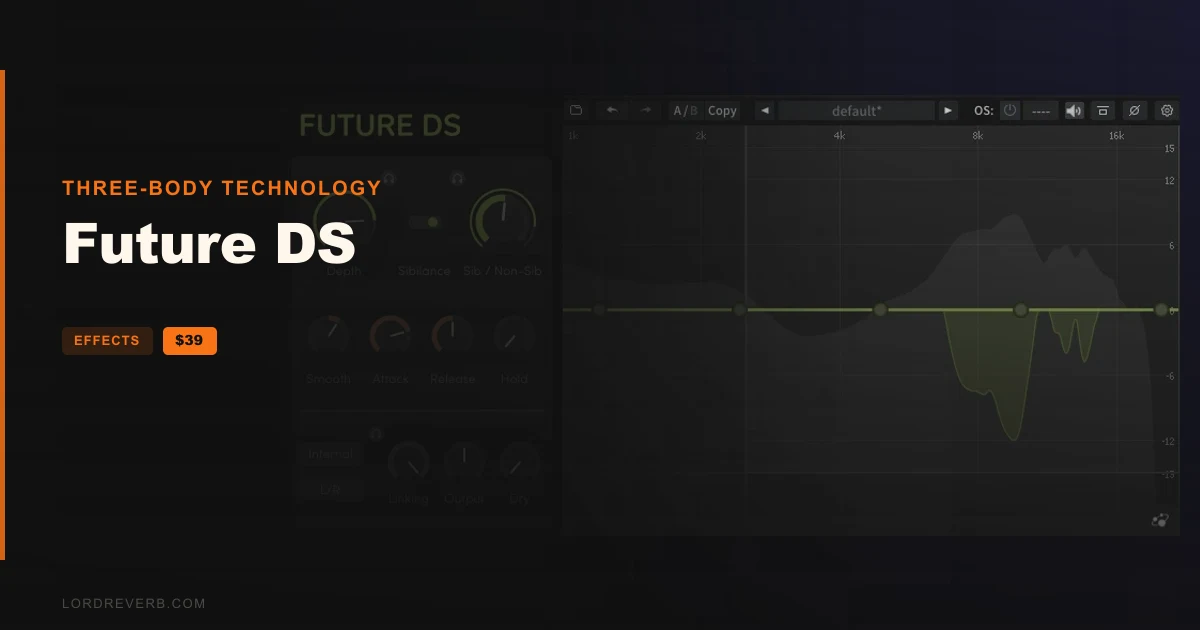
Future DS Black Friday pricing from Three-Body Technology is 20% off, which puts this spectral de-esser at $39 until Dec 4, 2026.
Future DS is a spectral de-esser. The maker says it controls harsh sibilance without dulling the air.
It spots problem peaks in the high end as they happen. It then pulls those peaks down and leaves the spectrum around them alone.
Most de-essers react to level. Future DS reads the spectrum instead.
The question it asks is whether a frequency spike is unnatural in context, not whether it is loud. Narrowband energy that breaks the spectral envelope gets attenuated, and neighbouring frequencies stay untouched.
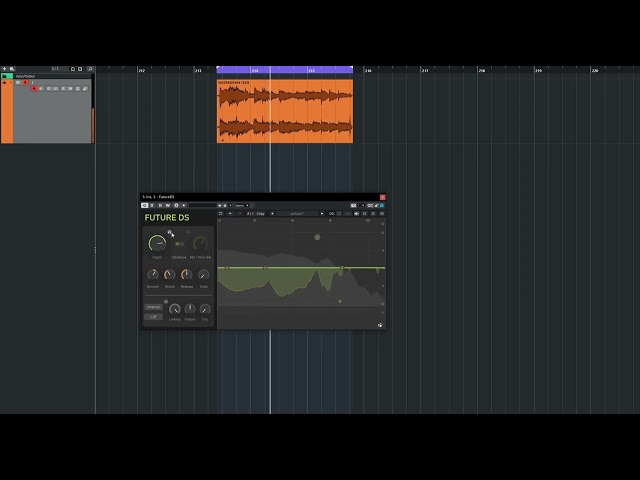
The panel carries Depth, Sibilance, Smooth, Attack, Release and Hold. An interactive spectrum display sits beside them, so you edit curves directly and see the result as you work.
The Sibilance switch picks the behaviour. With it on, processing triggers only when vocal sibilance is detected, so Future DS works as a dedicated de-esser.
With it off, Future DS acts more like a high-frequency limiter. It keeps harshness under control continuously, which the maker says suits cymbals, strings and bright mix buses as well as vocals.
By default Future DS runs in linear-phase mode, with 128 samples of latency (2.9ms at 44.1kHz). For tracking or live use, Zero Latency Mode switches to minimum-phase processing at 0 samples.
Oversampling goes up to 4x, which the maker says effectively eliminates aliasing across the whole processing chain. The DSP engine is heavily optimised for CPU, and the maker says you can put it on every vocal track in a session.
Yes. The Future DS Black Friday deal takes 20% off, so the plugin costs $39. The offer ends Dec 4, 2026. It is a spectral de-esser from Three-Body Technology.
Traditional de-essers trigger on level. Future DS reads the spectrum and looks for frequency spikes that are unnatural in context, then attenuates only that narrowband energy. Neighbouring frequencies stay untouched, so the air is preserved.
Yes. With the Sibilance switch off, it behaves like a high-frequency limiter that continuously controls harshness. The maker says this suits cymbals, strings and bright mix buses. With the switch on, it only processes detected vocal sibilance.
Yes. The default linear-phase mode has 128 samples of latency, or 2.9ms at 44.1kHz. Zero Latency Mode switches to minimum-phase processing with 0 samples, which suits real-time tracking and live performance.
Prices and end dates are checked at publishing time and can change, so confirm them at the store before you buy.