Affiliate disclosure: the "Get this deal" button is an affiliate link to the store. If you buy through it we earn a commission at no extra cost to you. Full policy

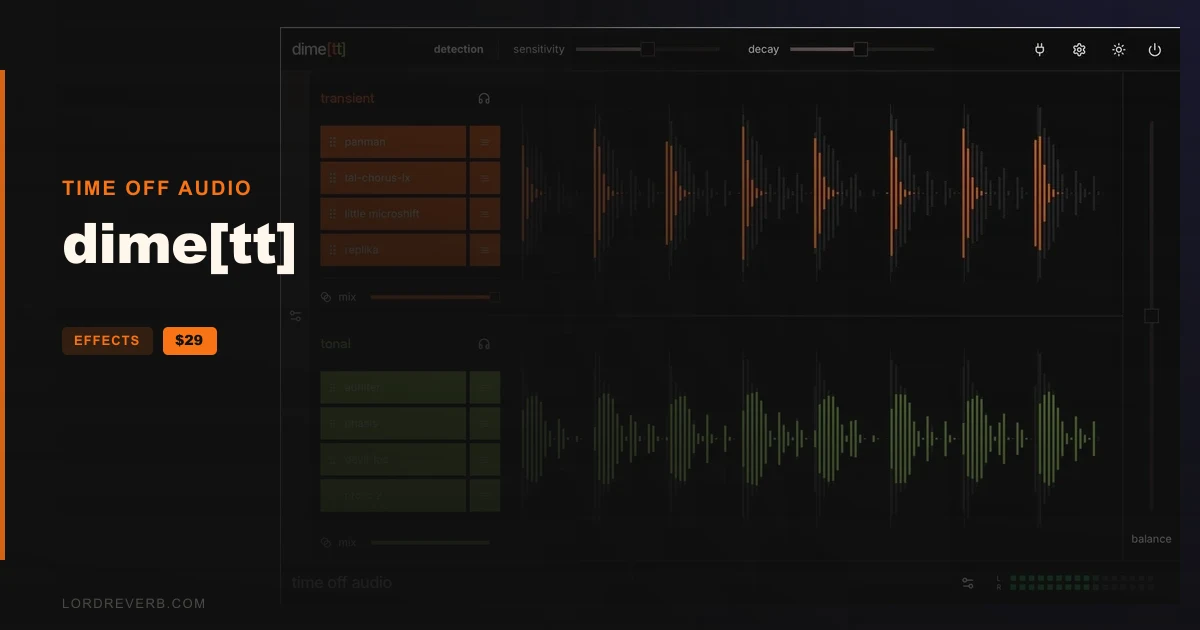
The dime tt Black Friday deal from time off audio takes 40% off, bringing the transient shaper plugin to $29 until Nov 19, 2026.
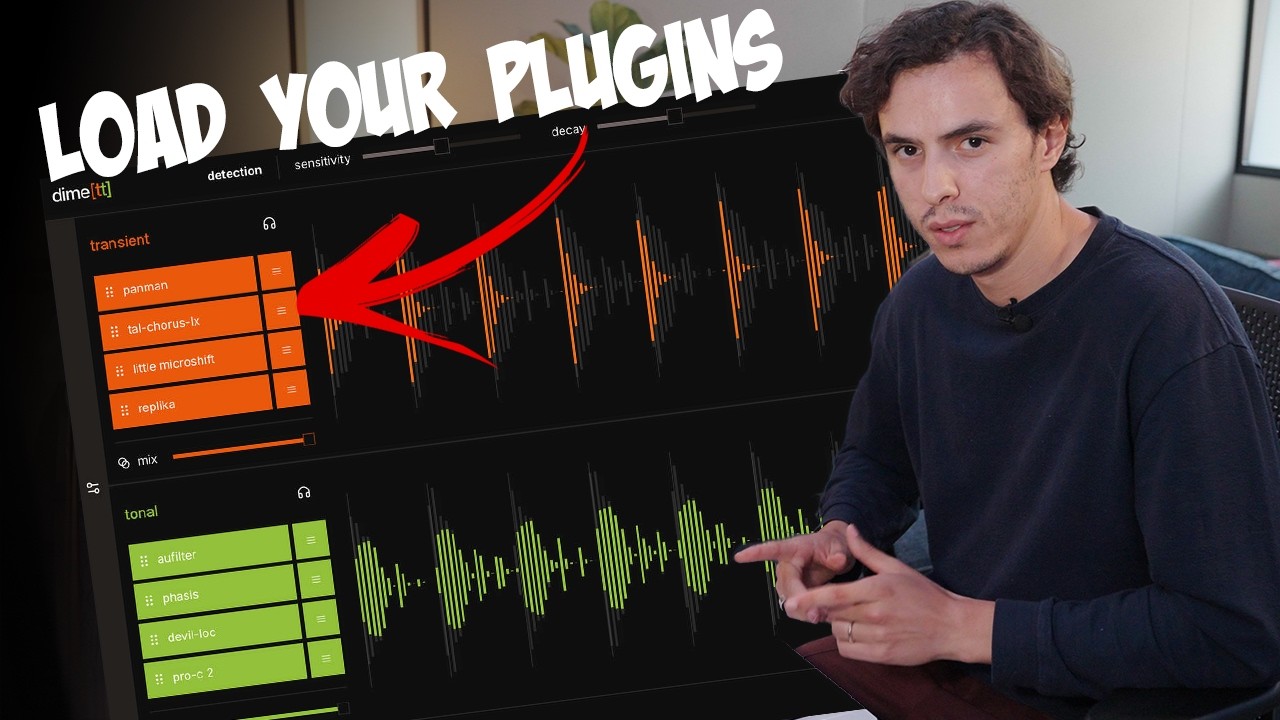
dime[tt] splits any audio signal into two layers: a transient-attack layer and a tonal-sustain layer. You then build a separate chain of plugins on each one.
The maker says this replaces the usual parallel setup of auxiliary busses, custom routing and sends. You get direct transient control inside a single plugin.
The plugin is also sold as part of the time off audio dime bundle.
The transient is the attack: a sudden change in loudness over a short period, measurable in decibels. The tonal layer is the tail, the sustained part that follows the attack.
Each layer is processed on its own. Most plugins hit the whole signal at once, and the maker's pitch is that this limits how much control you have over the result.
The problems it targets are the ones the maker lists:
Each layer gets its own effects chain, built from your own plugins. The maker's example: saturation on a guitar's transients and delay on the body of the signal.
That means grit on the attack and reverb on the sustain without sending anything out to a bus. The signal chain stays inside dime[tt].
The layers are recombined at the output, and the maker says the blend produces no unwanted artifacts.
Here is the control set the maker lists:
The maker also describes dime[tt] as low latency and CPU efficient, built so processing does not slow your workflow.
The full feature list from the maker comes down to these points:
Yes. The dime[tt] Black Friday deal takes 40% off this time off audio transient shaper plugin, bringing it to $29. The deal ends Nov 19, 2026. It is also sold inside the time off audio dime bundle.
It splits your audio into a transient-attack layer and a tonal-sustain layer. Sensitivity and decay controls target the transients. Each layer runs through its own chain of plugins, with a dry/wet slider per chain.
Yes. You build effects chains for each layer from your own plugins, such as saturation on the attack and delay on the sustain. Parameter mapping lets you control any plugin parameter directly from dime[tt].
No. The maker says it removes the need for auxiliary busses, custom routing and sends. You get direct transient control in one plugin, and the two layers are recombined with no unwanted artifacts.
Prices and end dates are checked at publishing time and can change, so confirm them at the store before you buy.